Introduction
While there isn’t a deity for everything in the infinite Shinto pantheon (as far as we know, anyway) reality comes pretty close. Tea deities, paper goddesses, ear kami, cough gods — few are the phenomena that have not yet found worship in Japan.
In a previous article, I introduced a shrine for sugar dedicated to Sakiyama Shūkei and Seki Ryōsuke, the historical figures instrumental in developing the Takamatsu Domain’s domestic sugar production industry during the early 1800s. However, there already existed a deity of sweets and confectionery long before the Portuguese brought sugar in the form of konpeitō to Japan in the 15th century.
This god of sweets is Tajimamori-no-mikoto, the semi-legendary figure whose story is told in the Nihon Shoki, the Kojiki, and the rest of this article.

Tajimamori goes to hell and back again
Around the year 60 AD, Emperor Suinin, who had reigned for the last 30 years, felt death drawing ever closer. He summoned one of his loyal subjects, Tajimamori-no-mikoto, and commanded him to seek out the fruit of immortality, a marvellous fruit said to ‘emit fragrance out of season,’ that would grant longevity. However, it grew only in Tokoyo-no-Kuni. Most interpretations of this story consider Tokoyo-no-Kuni to be the underworld, but scholars have also suggested that the phrase referred to countries across the ocean (i.e. China and the Korean peninsula).
Whichever it was, Tajimamori embarked on a long, perilous journey that lasted a decade. He successfully returned to Japan with the legendary fruit, but alas, was too late to save his liege. The story ends with him presenting the fruit to the Empress Dowager, and after planting the branches and other fruit at the Emperor’s tomb, passing away from grief. Some of these trees — or at the very least, their descendants — supposedly stand at Tachibana Temple in Nara. Thanks to this story, Tajimamori is now considered the deity of sweets.

Introducing the tachibana
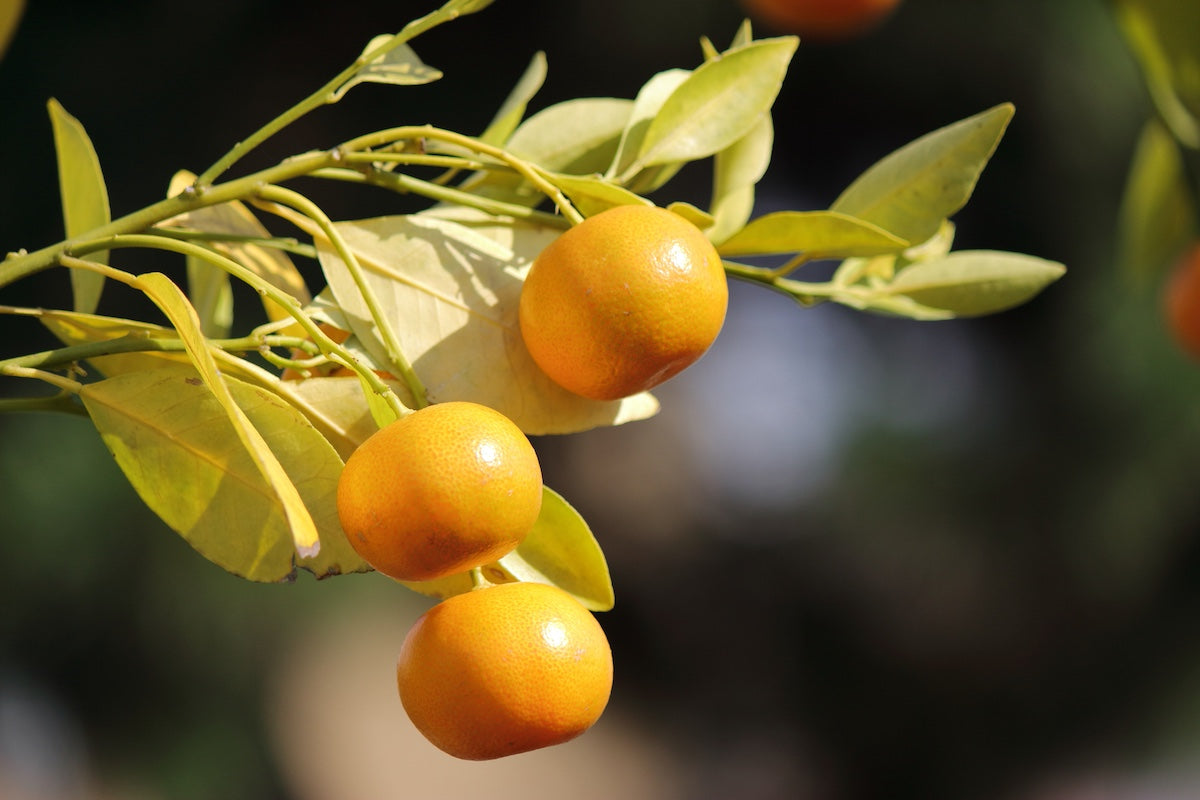
While we’ll never know if someone called Tajimamori really did travel to the underworld (or, horrors of horrors, out of Japan), the aforementioned fruit of immortality is believed to be the tachibana (Citrus tachibana), the only citrus genetically native to Japan. Its small size belies its powerful presence. Its flesh is far more bitter and tart than lemons or grapefruits, with only the faintest hint of sweetness, while a mere sliver of its zest contains the fragrance of a dozen citruses.
The majority of Japanese people will never have seen or tasted one, but will have unwittingly encountered it in some shape or form — for example, on Tachibana family crests, in miniature as trees on the dolls’ displays during Girls’ Festival in March, or most commonly on the face of ¥500 coins.
This does the beg the question: Is a citrus a sweet? It was certainly considered one during Tajimamori’s time, long before the Portuguese brought sugar to Japan. The word for ‘fruit’ was ‘kashi,’ which today refers to sweets and confections, and the tachibana was apparently considered the finest of all kashi.
While the Nihon Shoki notes that tachibana juice was used as a sweetener, for the last millennia, the tachibana has been prized mainly for its tart, beguiling fragrance and its symbolism. Heian women in the aristocracy tucked sachets of tachibana flowers into their kimono sleeves, and threaded its fruit onto cords to be worn as bangles. At New Year’s celebrations, tachibana was once used in place of mandarins on top of kagami mochi (rice cakes) to symbolise longevity. It appears in 70 or so poems in the Man’yōshū, praised for its beauty and heady perfume.
Why isn’t the tachibana popular today? Simply put, it’s not a commercially viable product for mass consumption. Not only is its intense bitterness unlikely to appeal to the average consumer, ripe tachibana fruits only remain edible for ten days at most before rotting, and would be unable to survive the logistics of supermarket supply chains.
Still, it’s not impossible to track a tachibana down in the age of the internet. One can buy tachibana seedlings online (fruits not guaranteed). The Nara Tachibana Project, dedicated to the revival of this rare native citrus, sells tachibana pepper paste and tachibana-infused ponzu. Enami Farms produces award-winning tachibana marmalade, while Yamato Distillery sells gin made with tachibana peel.

Sweet shrines for candyfreaks
Located in Toyooka City, Hyogo Prefecture, Nakashima Shrine dates back to the first half of the 7th century. Tajimamori was apparently born in this area, so so it’s no surprise that one of the few shrines in Japan that venerates him is in his hometown. However, he isn’t buried here, but in Nara. Emperor Suinin’s mausoleum is a keyhole-shaped tumulus surrounded by a moat; Tajimamori was also interred and buried on a smaller mound floating in the same moat. (History says they were merely roommates — I mean, emperor and retainer.) Nakajima Shrine’s name — ‘inside island’ — is said to derive from the location of Tajimamori’s grave.
On the third Sunday of April, Nakashima Shrine holds their annual festival — the Kikka-sai, or ‘Tachibana Blossom Festival.’ This is more colloquially known as the Kashi Matsuri, or Sweets Festival. It attracts confectioners, candy companies, chocolatiers, and wagashi makers from far and wide who visit to pray for success and prosperity.

Kaso Shrine 菓祖神社, written with the characters for ‘sweet’ and ‘ancestor’. This is a relatively new shrine, established as an auxiliary shrine on the grounds of Yoshida Shrine in Kyoto. It was built here at the request of Kyoto’s wagashi and confectionery industry in 1956 — presumably so they wouldn’t have to travel too far for an annual festival.

Kitsumoto Shrine 橘本神社 in Kainan City, Wakayama Prefecture, is another major shrine dedicated to Tajimamori. According to shrine lore, the tachibana tree (or at least one of the branches) that Tajimamori brought back to Japan was planted on the ‘Hill of Six Trees’ in this area. The shrine fell into decline, but was restored by local residents during the Meiji period and relocated to its present site. There is still a tachibana tree on the precincts today.
Being Japan’s only native citrus, the tachibana is considered the progenitor of most other Japanese citrus today, including the mikan (Citrus unshiu, or satsuma mandarin). Not so coincidentally, Wakayama is Japan’s top mikan producer. It is fitting, then, that their annual Sweets Festival held on the first Sunday of April is also known as the Mikan Matsuri (Mandarin Festival).
Written by Florentyna Leow