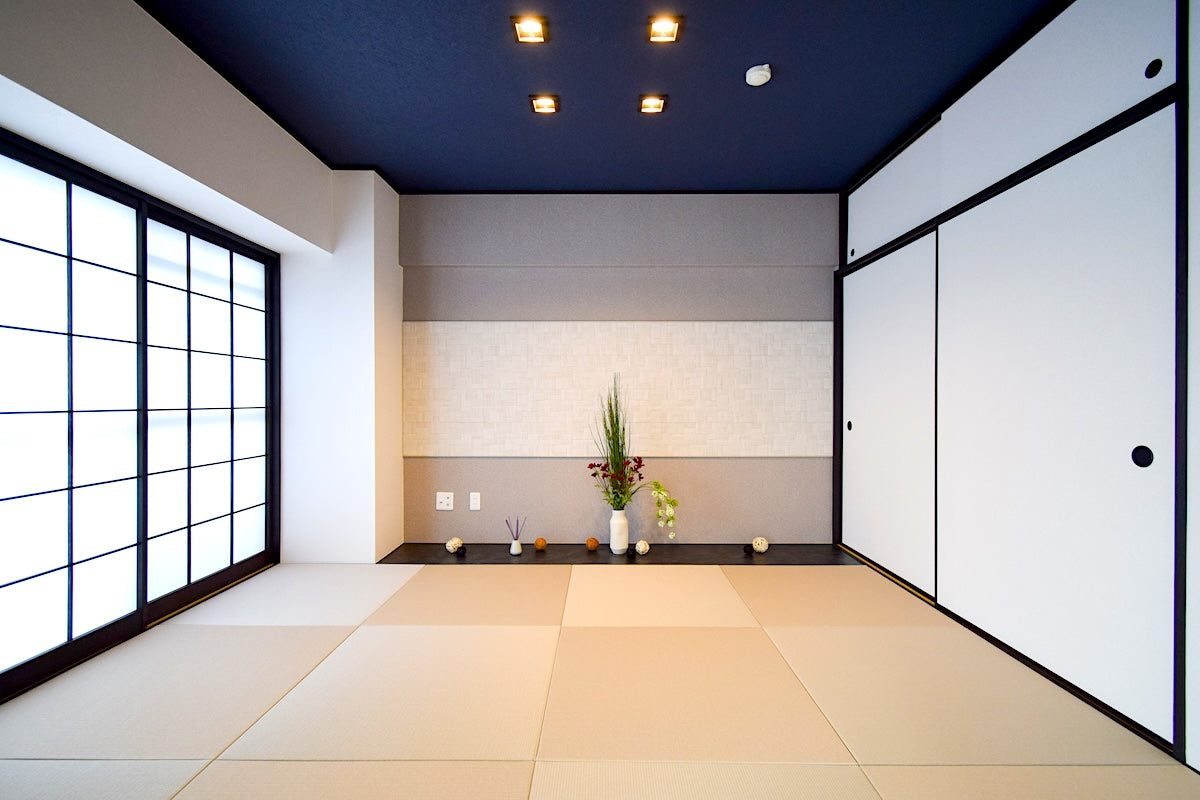
You’ve been feeling an attraction to tatami, the urge to have the mats in your life.
Perhaps you were seduced by those Japanese-style rooms that keep ambushing you on Instagram, or perhaps something shifted after you binge-watched Shogun and started to find your carpets a little unfulfilling.
Because tatami just looks…right. The way it stretches out, inviting you to lie down, nestle close and breathe slower. The way a single mat creates a soft island in the midst of wooden or concrete floors.
And there would be the honesty of natural materials: rush grass fibers, rice straw or woven paper instead of too-perfect synthetic flooring.
But then come the doubts. You wonder if this is true love or just a Japandi infatuation brought on by soft lighting and algorithmic peer pressure.
Is there even room for tatami in your life? Would it get along with the furniture and the other floors or would it be a high-maintenance partner in need of constant reassurance and dehumidifiers? And - let’s be honest - what if the honeymoon ended and…mold appeared?
If any of these questions have crossed your mind, read on. This guide will walk you through what you need to know about tatami mats before deciding whether they're right for you. Let's begin at the beginning.
A Half-Size History of Tatami
This traditional flooring material started out in ancient Japan as futon-like mats used for sleeping by aristocrats, who preferred not to roll on the floor like commoners.
As centuries passed, tatami mats spread to temples, tea rooms, samurai residences and, eventually, farmhouses and other homes.

Tatami has become so entrenched that, even today, room sizes in Japan are measured by the number of tatami mats they can accommodate: 4.5-jo (mat), 6-jo, 8-jo and so on.
This will probably be how a Japanese landlord will describe a room size while you’re still trying to figure out if it’s 12 square meters or a very ambitious closet.
Thick or Thin? Traditional vs Modern Tatami
Traditional tatami mats
Conventional tatami is thick - about 55-60 mm (a little over 2 inches).
The compressed rice straw core makes it springy and resilient underfoot, as well as excellent at regulating humidity.
Pros
- Authentic feel and smell of traditional Japanese flooring
- Great insulation and cushioning; comfortable to sit or kneel on
- Durable - with proper care, high-quality mats can last decades.
- Ideal for traditional Japanese rooms built around tatami dimensions.
Cons
- Heavy and harder to move
- Usually requires a floor structure designed for tatami. Western-style floors would need to be retrofitted for these mats.
Unit or Oki Tatami
Known as unit tatami or oki tatami, these modern mats are much slimmer - often around 15 mm thick - but still cushioned thanks to board or foam cores. The mats usually come with a non-slip backing.
Pros
- Much lighter than traditional tatami, making the mats easier to install, rearrange or remove for seasonal cleaning. Also easier to store when not in use.
- Great for placing on wooden floors and creating a tatami zone in a larger room.
Cons
- Less cloud-like underfoot. You’ll feel more of the floor beneath.
- Depending on the core material, dents from furniture may be more noticeable.
In a nutshell - or a half-size mat:
If you're building or renovating a room specifically to serve as a tatami room, the traditional thick mats will provide the most authentic feel and performance.
If you want to add tatami to an existing Western-style home without major remodeling, unit tatami mats would offer more versatility and less hassle.
What You Need to Know About Tatami Mat Sizes
Tatami mat sizes differ by region in Japan. The common traditional sizes are:
- Kyo-ma (Kyoto size): 95.5 x 191 cm
- Chukyo-ma (Nagoya size): 91 x 182 cm
- Edo-ma (Tokyo size): about 88 x 176 cm
- Danchi-ma (apartment size): around 81-85 x 170 cm
If you're buying new mats or replacing those in a Japanese tatami room, be sure to check whether it's Team Kyoto, Tokyo or Danchi. Measure your room in centimeters, not vibes.
If you’re outside Japan and choosing modular tatami, this would likely be square tatami mats, with each side measuring about 82-90 cm. These mats slot neatly into contemporary interiors and make layout decisions easier.
Choosing the Right Tatami Surface
A typical tatami mat has:
- A core (toko or doko) made of rice straw or wood fiberboard or foam or a combination of these materials
- A fabric border (heri)
- A surface (omote) woven from igusa rush or washi paper or synthetic fibers. The omote is the part that your bare feet, socks and that occasional rogue crayon meets.
Igusa (Rush Grass) Omote

If you’ve ever stepped into a tatami room and thought, 'Wow, this smells like a forest,' that’s igusa doing its thing.
Fresh tatami mats are usually pale green and smell like fresh-cut grass or hay; over time, they mellow to a golden brown and the scent softens.
That fragrance comes partly from phytoncides, the same chemical compounds that trees release in forests and which have been linked to stress reduction.
Pros
- Natural fragrance
- Regulates humidity, absorbing moisture in humid seasons and releasing it when the air is dry.
- Absorbs sounds and odors
- Soft texture
- Ages to a golden brown hue
Cons
- Prone to mold in poorly ventilated rooms
- Can attract mites
- Color fades with heavy use
Washi (Japanese Paper) Omote
This type of tatami surface is made from paper fibers that are woven and finished in the same way as igusa surfaces. Washi surfaces are good for those who prefer tatami that needs only minimal maintenance.
Pros
- Less likely to become moldy or to attract mites
- Highly durable
- Color remains stable even when exposed to sunlight
- Available in various colors
Cons
- Doesn’t provide natural fragrance and the calming effect of plant aromas
- No air purification ability
Synthetic Omote
These surfaces are made from polypropylene or similar materials shaped into straw-like fibers. Great for households with children and pets or where the mats will see heavy use.
Pros
- Durability
- Water-resistant
- Easy to clean
Cons
- No natural feel
- No scent
- Limited humidity control
Borders or Borderless?
Bordered Tatami
This is the classic tatami seen throughout the country: a rectangular mat with fabric edging along the long sides.
Pros
- The borders protect the edges from fraying, lengthening the lifespan of the mats.
- Wide variety of borders, with fabrics ranging from solid colors to traditional motifs.
Cons
- While bordered tatami suits traditional Japanese homes, it may make Western-style rooms feel a little too formal.
- If you’re chasing a minimalistic Japandi look, the borders may break up the floor up visually more than you’d like.
Borderless Tatami

Borderless tatami skips the fabric edging entirely. A well-known type is Ryukyu tatami, an Okinawan style usually presented as square mats laid with alternating grain directions to create a checkerboard effect.
If your heart wants a modern Japandi living space, square borderless tatami in muted tones (beige, gray-green, soft charcoal) will slot in effortlessly among pale wood, linen and that one beloved Scandinavian floor lamp.
Pros
- Clean, contemporary appearance; works well with Japandi interiors
- Checkerboard grain pattern plays beautifully with natural light
- Square shapes are easy to combine into modular layouts.
Cons
- The edges are more exposed to wear.
- The craftsmanship is more demanding, so these mats tend to be pricier.
Tatami-Doko: Best Choice for the Base?
Wara-Toko (Natural Straw Base)

Pros
- Breathable and regulates humidity
- Absorbs carbon dioxide
- Provides insulation
- Luxurious cushioning
- Extremely durable
Cons
- Higher price
- Needs ventilation - more likely to become moldy in modern buildings, where there tends to be less airflow compared with traditional Japanese buildings.
Kenzai-Toko (Compressed Wood and Foam Board)
Pros
- Lightweight
- Affordable
- Low incidence of mites
- Good heat insulation
Cons
- The foam loses shape
- Less durable
- Poor humidity absorption
Wara-Sandwich Base
A combination of polystyrene foam and straw.
Pros
- Feels similar underfoot to natural straw
- Light
- Resistant to humidity
- Moderately priced
Tatami in Modern Times
Not everyone drawn to tatami is chasing the Japandi look. Some just want a corner to lounge in, a place for yoga or a play area for their children.
Just as there may be no such thing as a perfect relationship, the perfect tatami may not exist. But if you're still looking to buy tatami, as long as you choose the right materials, colors and thickness, you can certainly find the right one.
By Janice Tay