- Sushi: Tokyo Food Icon
- Ramen: One Dish, Infinite Variations
- Udon and Soba: The Older Noodles
- Okonomiyaki: Pancakes As You Like
- Japanese Street Food: Birds, Balls and Baby Castella
- That Very Japanese Dish, Curry
- Kobe Beef and Beyond
- Ordering Food in Japan Without Japanese
- Traditional Japanese Food Etiquette
- Convenience Store Food Tour: A Guide to Japanese Cooking
- What to Eat in Japan? Just About Everything
A trip to Japan can be measured in temples and bullet train rides.
But it can just as reasonably be measured in noodle bowls, raw fish, breaded pork cutlets and one never-to-be-repeated attempt to wolf down hot takoyaki.
This, too, is culture.
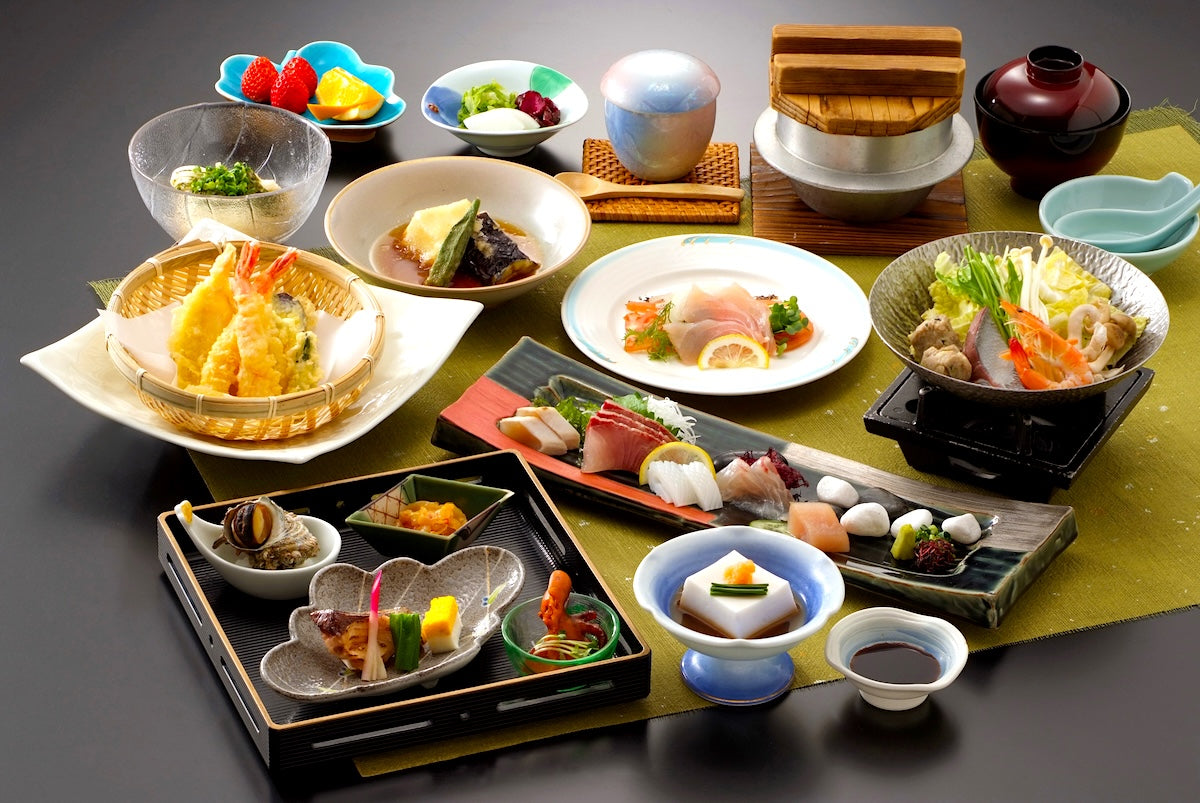
What follows is a guide to dishes in Japan worth planning your trip around - traditional and modern, internationally famous and regional, easy to order and worth the effort.
Sushi: Tokyo Food Icon
The origins of sushi go back centuries to funazushi, a delicacy made by mixing salted raw fish with cooked rice and fermenting it for months.
But this was too long a wait for Edo - pre-modern Tokyo - a city with things to do, people to see and food to grab. A faster form of sushi was born and nigiri-zushi began its march to world domination.
Credit for the invention usually goes to 19th-century chef Hanaya Yohei, who began molding balls of vinegared rice topped with prepared seafood and serving them two pieces at a time, on the spot.
But the shogunate was not known for supporting innovation. During the Tenpo Reforms of the 1840s, Yohei was arrested along with around 200 other vendors for selling what officials considered extravagant food. The sushi survived the crackdown.

Today, sushi ranges from conveyor-belt kaiten-zushi - where plates of nigiri circle past at prices close to vending-machine change - to the hinoki counter of a Michelin-starred restaurant where the itamae chef does not speak to you unless he feels like it.
Sashimi - raw fish without the rice, thinly sliced and served with wasabi and soy sauce - is close kin to sushi and shares the same underlying logic: that the best seafood needs almost nothing done to it.
Ramen: One Dish, Infinite Variations
Introduced to Japan from China, ramen went entirely native.
The broth is the point. Not the noodles, not the chashu pork, not the soft-boiled egg. The broth. Any introduction to ramen will cover four broad styles: soy sauce, salt, miso - the standard in Hokkaido, where the winters make you want something substantial - and tonkotsu.
Pork bone ramen is Fukuoka's contribution to the national conversation: a cloudy broth of long-cooked bone collagen, thin straight noodles and a richness that sticks to your ribs and lingers in your clothes.
Udon and Soba: The Older Noodles
Japan has three great noodle traditions and one of them tends to get overshadowed even though it predates ramen by centuries. Udon - thick, chewy wheat noodles in a dashi broth - is Japanese comfort food at its most unassuming. It's eaten hot or cold and plain or loaded with toppings such as tempura and fried tofu pouches.
Ramen also tends to take attention away from soba but buckwheat noodles have long been a firm favorite in Japan, especially when the temperature climbs. Nutty in flavor and eaten cold with a tsuyu dipping sauce or hot in broth, soba - along with sushi, tempura and eel, was one of the four kings of Edo's street food culture.
By the 18th century, soba stalls ran late into the night - Edo's original midnight snack - serving the city's population of streetwalkers and single men.
Restaurants that serve udon and soba tend toward simplicity in decor, speed in service and depth in broth. These are not dishes for lingering. Order, eat, leave, feel better.
Okonomiyaki: Pancakes As You Like

Literally translated as 'cook as you like', okonomiyaki comes in two main versions: Osaka and Hiroshima.
In the Osaka style - the version that most people encounter first - the ingredients are mixed into the batter before cooking. The cabbage, tenkasu (tempura scraps), pork and sometimes mountain yam for lightness are piled onto a hot plate and flipped. The result is a thick, savory pancake with a fluffy interior and crisp bottom, topped with a sweet-savory sauce, mayonnaise, dried seaweed and bonito flakes that ripple in the heat.
The Hiroshima version, on the other hand, layers the ingredients on crepe-like dough rather than mixing them into the batter. The other big difference: the layer of noodles. The result is closer to a savory cake; you can see the layers in cross-section when you dig in.
Japanese Street Food: Birds, Balls and Baby Castella
All over the world, street food usually involves something on a stick. In Japan, that means pickled cucumbers, chocolate-covered bananas - and chicken.
Yakitori is the art of the skewer: bite-sized chicken pieces grilled over charcoal and seasoned with salt or glazed with a sweet soy sauce. The chicken is not limited to breast meat - thigh (momo), negima (thigh with green onion) and tsukune (minced chicken meatballs) - are among the favorites.
Takoyaki, often translated as 'octopus balls', brings a different energy to the street. Originating in Osaka, it's the edible embodiment of the city’s reputation as a place built for eating rather than restraint.

Each round is cooked in a molded pan until the outside turns lightly crisp while the inside remains soft and tender, hiding bits of octopus within. Finished with takoyaki sauce, mayonnaise, aonori seaweed and bonito flakes, the result is equal parts snack and spectacle, designed to be eaten standing, walking and occasionally regretting that you did not wait for it to cool.
At festivals and markets, the offering broadens: yakisoba (stir-fried wheat noodles with pork), grilled squid glazed with soy, karaage - Japanese fried chicken - and baby castella, small sponge cakes pressed into rounds and eaten hot from the stall.
Fukuoka has the most active yatai culture in the country; the stalls in the Nakasu and Tenjin areas run into the evening and serve everything from tonkotsu ramen to mentaiko omelets at low stools under canvas roofs.
That Very Japanese Dish, Curry
In Japanese curry, three countries meet. After the East India Company brought Indian cuisine to Britain in the 18th century, the British navy adopted a wheat-thickened version for sea voyages and when the Meiji-era Japanese navy modeled itself on the British navy, it adopted the curry.
The first Japanese recipe appeared in 1872. The navy made it a Friday staple to help sailors keep track of time on long voyages; school cafeterias adopted it after the war and it is now eaten more widely in Japan than ramen.
Unlike Indian and British curry, Japanese curry is slightly sweet, eaten with short-grain rice and accompanied by fukujinzuke, a red, soy sauce-based pickle.
Kare raisu - curry rice - is one of the great examples of Japan taking something it found and making it entirely its own. And if it comes with tonkatsu, that combination of curry and deep-fried breaded pork will take your trip to Japan out of tourist territory and into local life.
Kobe Beef and Beyond
When it comes to food, there are four things that most visitors to Japan seek out: sushi, ramen, tempura - and wagyu.

Kobe beef and its marbling enjoy the highest brand recognition but Matsusaka beef - known for its sweetness - and Omi wagyu - more delicate, with a lighter fat profile - are gaining ground.
The ways to enjoy wagyu are many: served as steak, grilled in thin slices of beef as yakiniku, swished in a shabu-shabu broth or simmered with tofu and vegetables in a sweet and savory sauce for sukiyaki.
Or you can combine two Japanese food icons and get a plate of beef sushi.
Ordering Food in Japan Without Japanese
Most Japanese restaurants do not require diners to speak Japanese. Photo menus are standard at chain restaurants; plastic food displays outside the entrance can be pointed at directly.
At ramen shops and gyudon chains, a ticket machine at the door will take your order: press the buttons for what you want, hand the ticket over at the counter, sit down.
For everything else, the key phrase is 'kore o onegai shimasu' ('This, please.'), delivered while pointing at the menu. To call a server: 'Sumimasen.' To ask for a recommendation: 'Osusume wa nan desu ka?' (Or more simply, 'Osusume wa?')
To close the order: 'Ijou desu.' To ask for the bill: 'Okaikei onegai shimasu.' Payment is almost always at the register rather than the table; take the slip with you.
Smartphone translation apps have made things a lot easier but it always goes down well if you try to speak the language.
At an izakaya, a small appetizer called otoshi or tsukidashi will arrive shortly after you sit down. It is not optional and it is not free. Think of it as the table charge or as the kitchen introducing itself with a tasting set that costs no more than a few hundred yen.
Traditional Japanese Food Etiquette

One word before you eat and two words after. Itadakimasu - often translated as 'I humbly receive' - is said before the meal, hands pressed together, directed at the food and everyone involved in producing it. This expression of gratitude is uttered even when alone.
Gochisosama deshita - 'That was a feast' - follows when you finish, addressed to whoever cooked or served.
A number of etiquette points revolve around chopsticks.
Tate-bashi refers to the act of sticking chopsticks upright into a bowl of rice during a meal - a taboo act in Japan because it resembles the bowl of rice offered to the deceased during funerals.
Passing food from one pair of chopsticks to chopsticks is also considered extremely bad manners as it resembles the ritual of transferring cremated bones.
Letting your chopsticks hover over dishes while you decide is merely rude. Keep the tips of your chopsticks clean, place them on the chopstick rest in between bites and do not use them as pointers or drum sticks for a quick performance on a rice bowl.
As far as possible, finish your food. Japan's concept of mottainai - the grief of waste - is embedded in eating. It took effort to grow, cook and serve the meal in front of you; the appropriate response is to match that effort.
Convenience Store Food Tour: A Guide to Japanese Cooking
More than a place to grab a drink and snack, Japan's konbini, or convenience stores, are a compact food guide to the country’s everyday cuisine, a place to do a self-directed food tour through tidy lines that stay open 24 hours.
Walk in and you're immediately faced with a selection of food that mirrors the dishes served in homes and izakaya gastro-pubs.
Rice balls sit in orderly rows, filled with everything from tuna mayonnaise to pickled plum. Bento boxes offer combinations of grilled fish, fried chicken, tamagoyaki and rice. If you prefer noodles or porridge, or if you just want a soup and salad, the konbini has you covered.
Then there are classic simmered dishes such as nikujaga - Japanese meat and potato stew - and oden. Choose your own oden adventure - daikon radish and boiled eggs are the most popular ingredients - and enjoy one of those dishes that feel both practical and comforting - and go well with a drink or two.
If you like to end your meals with something sweet, you'll find enough dessert for a buffet display. Traditional confections filled or covered with red bean paste are, of course, well represented but custard puddings also line the shelves, demonstrating Japan’s love of gentle flavors and textures that sit somewhere between soft and nostalgic.
What to Eat in Japan? Just About Everything
What makes Japanese cuisine so compelling is not only the quality of the ingredients but also the breadth of styles.
It allows for elegance and comfort, speed and ceremony, subtlety and in-your-face boldness. More than a collection of famous dishes, the country's food culture offers ways of thinking about ingredients, seasonality, balance, aesthetics and hospitality.
Which is to say, the next food adventure is only as far away as the next meal.