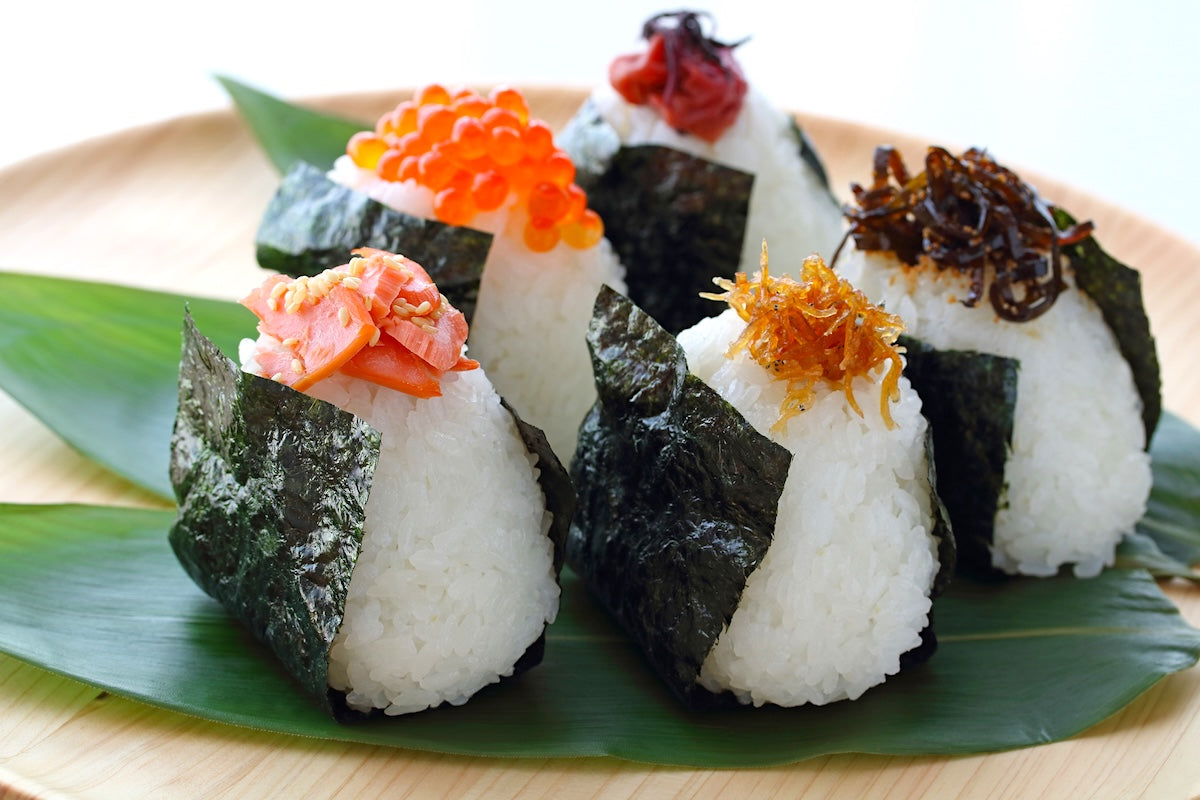
Lunch in Japan arises from an intersection of military logistics, maternal affection, railway capitalism and a level of organizational discipline usually associated with lunar missions.
Somewhere along the line, lunch stopped being just a way to avoid fainting before dinner and became its own small cultural ecosystem, complete with etiquette and engineering breakthroughs.
Which is not to say that Japan insists on making lunch a performance though some anime-themed bentos may certainly give that impression. A bowl of soup, a piece of grilled fish, some pickles and rice arranged thoughtfully on a tray. Not luxurious exactly. Just civilized.
From Hoshii to Hello Kitty: A Short History of the Bento
The bento started as a problem: how do you eat when you're nowhere near a kitchen?
The earliest solution was hoshii - rice that had been steamed then dried, making it lighter and easier to transport. Soak it in water or pour hot water over it and you had something edible. Eat it dry and - thanks to the rice starch having been gelatinized during steaming - your digestion wouldn't rebel either. This was travel food from the Heian era (794-1185) and also what soldiers carried into battle centuries later.
But the real transformation happened in the Edo period (1603-1868). Until the 1600s, most people ate twice a day, which meant no midday meal. Once three meals became standard, bento culture had somewhere to go - and it went somewhere theatrical.
The makunouchi bento, now lodged firmly in the Japanese lunch canon, began life as theater fuel during the Edo period. Kabuki performances in Edo - the old name for Tokyo - could stretch from around six in the morning until six in the evening so audiences needed to be sustained by more than entertainment. Inside the dimly lit playhouses, people ate small rice balls and neatly arranged side dishes designed to be consumed quickly and easily.
According to the makunouchi bento's most popular origin story, the name reflects its beginnings: 'maku' means curtain so 'makunouchi' referred to the time or space between the curtains - in other words, the intermission meal.
Meanwhile, theater teahouses and nearby food stalls were already offering Edo-period fast food. Soba and udon shops known as kendon-ya delivered noodles directly to theatergoers, helping to keep audiences going through days of dramatic betrayals and revenge plots.
What actually went into these bentos is recorded in Morisada Manko, a sprawling 19th-century encyclopedia of Edo-period daily life. According to its descriptions, a makunouchi bento came in a box roughly 18 cm square and contained 10 small rice balls together with tamagoyaki, kamaboko fish cake, konnyaku, grilled tofu, simmered taro and strips of kanpyo gourd.
The format has changed little. Modern makunouchi bentos sold in department stores, train stations and convenience stores follow essentially the same structure: a little rice, a little protein, several vegetables and enough variety to convince you that this is a proper meal. The lunchbox has left the theater, boarded the train and conquered Japan to become one of its most popular boxed meals.
Bento has evolved alongside Japanese life: picnic boxes enjoyed beneath cherry blossoms, homemade lunches packed into Hello Kitty containers as a distinctly Showa-era expression of parental devotion and, eventually, kyaraben - character bentos in which rice, nori and other ingredients are coaxed into the shapes of animals and cartoon figures.
Today, bento encompasses all of these forms: the homemade version, the convenience-store standby and the kind that must first be photographed for social media before anyone is permitted to touch it.
Ekiben: How Train Stations Became Lunch Destinations
The standard story explaining the origin of ekiben - the railway station bento - places it at Utsunomiya Station, which opened in 1885. An inn called Shirokiya reportedly marked the occasion by selling two rice balls and two pieces of pickled daikon radish, wrapped in bamboo bark.
Naturally, there are rival claimants to the title of Japan's first ekiben but what nobody disputes is what these bento became: a moving showcase of regional Japan.

As the rail network expanded, station bento stopped being generic travel rations and started being advertisements for the place selling them: seafood from the coast, beef from cattle country, mountain vegetables from wherever the train happened to be climbing. Buying lunch at a station became a way of tasting the prefecture you were passing through, whether or not you planned to get off.
Department stores eventually turned this into consumer events. Ekiben fairs - pop-ups bringing regional station bento from across Japan together - remain consistently popular even as trackside sales decline with faster trains and better station restaurants.
Teishoku: The Art of the Japanese Set Meal
If bento is lunch that you bring, teishoku is lunch that someone hands you,.
A teishoku set meal is built on a structure with deep roots: ichiju-sansai, one soup and three dishes, alongside rice. Here's the layout, more or less: rice in the front left corner, miso soup in the front right, main dish in the back right, smaller side dishes along the back left. West of Tokyo, in the Kansai region, some restaurants position the soup in the back left, leaving the main dish more visible up front - a theory holds that this is because Osaka eateries like their main dishes to do the talking, though nobody seems entirely sure.
Rice bowls and soup bowls are lifted and held while you eat from them; large plates stay on the table. Cup your hand under food to catch drips - the so-called tezara, or 'hand plate' - and you'll risk being judged by someone who really cares about Japanese table manners.
More importantly, finish your food - even leaving a few pickle slices behind runs against mottainai, the idea that wasting food is something to actively avoid. This is especially true for the rice, which holds an honored position in Japanese culture.
How Convenience Stores Took Over Lunch
When Seven-Eleven Japan started developing its own onigiri in the 1970s, the company was working against a basic cultural assumption: onigiri were something your mother made, not something you bought.
The breakthrough was technical rather than culinary. In 1978, the company developed a wrapping method that kept the nori separate from the rice until the moment of eating - the onigiri where unwrapping the plastic is itself part of the ritual and the nori stays crisp instead of turning into something like wet paper.
Tuna mayonnaise onigiri, launched in 1983, did the rest: it became hugely popular and convinced an entire country that buying an onigiri was a completely normal thing to do.
Lunchtime is when convenience stores earn their keep. With most workers going for lunch in the same narrow window - roughly noon to one - nearby restaurants fill up fast, spawning the phenomenon of 'lunch refugees' - office workers wandering in search of a free table during the one hour they have to find one. Convenience stores sidestep the problem entirely. No queue for a seat because there isn't one.
But despite their photogenic egg sandwiches, convenience stores in Japan have a habit of trapping people in a carbohydrate spiral: bread, rice balls, instant ramen and bread filled with yakisoba noodles for those who feel plain bread lacks heft. Nutritional balance, meanwhile, leaves the building without saying goodbye.
The usual Japanese solution is not grand reinvention but choi-tashi - adding just a little extra. It's the culinary equivalent of realizing your life choices may not be ideal and placing a boiled egg on top of them.
Here's how it works: a cup salad appears beside the fried noodle bun. Cold chicken and tofu bars add protein. Seaweed soup, cheese, nuts and simmered vegetables are recruited to prevent lunch from becoming a monochrome landscape of beige carbohydrates.
Convenience stores, sensing both public anxiety and the market potential of human guilt, have responded accordingly. Shelves increasingly feature additive-free products, high-protein meals, low-carbohydrate lunches and packaging covered in reassuring phrases about fiber and wellness.
For konbini diners, the goal is not culinary perfection. The goal is a quick, filling and affordable meal - and to emerge from lunch without feeling like a rice-filled balloon drifting toward unconsciousness during a Zoom meeting.
Recreating Teishoku at Home
You don't need a teishoku-ya, a convenience store or even particularly advanced Japanese cooking skills to bring some of this into your home cooking.
The underlying principle - ichiju-issai, one soup and one dish, alongside rice - is scaled perfectly for a weekday lunch but if this sounds intimidating, start with something that comes together in one pan.
Oyakodon - chicken and egg simmered in a sauce and served over rice - takes less than an hour and uses ingredients you probably have in your fridge and pantry: chicken, onion, eggs, mentsuyu and water.
Simmer the chicken and onion until cooked through, pour in most of the beaten egg, let it set partially, then add the rest and finish to your preferred softness. Serve over a generous bowl of rice.

Make-ahead staples do a lot of the heavy lifting in Japanese home cooking. Simmered hijiki seaweed, kinpira gobo (sautéed and simmered burdock root) and seasoned minced chicken soboro all keep well in the fridge and can be deployed across several lunches - spooned over rice, tossed through udon or simply served as part of a meal of rice and side dishes alongside a fish or meat main.
The logic is the same one that's been running underneath Japanese cuisine for centuries: do the time-consuming work once and let it pay off across multiple meals.
For something closer to a teishoku experience, a one-plate arrangement will work: rice or a couple of onigiri, fish or dashimaki tamago as the main and two or three small side dishes - simmered vegetables, a quick pickle, whatever's left from the night before - arranged on a single large plate or across a few small bowls.
Using small dishes rather than one large plate changes the feel and visual appeal considerably; it's a small adjustment that pushes a meal from 'a quick lunch' to 'a lunch I planned'.
Japanese dishes are also characterized by their balance of colors. Aim for something red, something green and something yellow on the plate - a slice of tomato, a quick-blanched vegetable, a wedge of tamagoyaki - and even a simple meal will look like it was composed rather than thrown together from leftovers in the fridge.
Civilization in a Packed Lunch
Japanese lunch culture survives because it solves several problems at once. It feeds people quickly, seasonally, affordably and - perhaps most importantly - with enough structure to make daily life feel slightly less chaotic.
Whether it's a handmade bento assembled before sunrise, an ekiben eaten while Mount Fuji flashes past the train window or a konbini onigiri unwrapped with the concentration of a bomb disposal technician, the same idea keeps surfacing: if you're going to eat, you may as well do it properly.