Many people encounter sake on a trip to Japan. A small ceramic cup appears beside a meal. Someone says 'kampai'. The liquid is either suspiciously hot or surprisingly cold. There's often a brief moment of uncertainty regarding whether it should be sipped delicately, swallowed decisively or approached with the caution reserved for unfamiliar medicine.
Meanwhile, somewhere else at the table, there is almost certainly someone explaining junmai.
Japan's sake culture is built around an extraordinary amount of terminology. There are names for rice strains, names for brewing processes and names for at least half a dozen serving temperatures.
But the terminology - like the label on a bottle of sake - isn't there to intimidate you. It's there to tell you whether the drink will be fragrant or savory. Delicate or rich. Best chilled, warmed or left at room temperature to express its full personality.
This is one of the characteristics of Japanese food culture: the refusal to separate pleasure from precision.
Expertise isn't required to enter the sake world. You do not need to memorize rice polishing ratios to enjoy a good cup any more than you need to understand kiln temperatures to appreciate a tea bowl. Still, the moment you begin learning the vocabulary - junmai, ginjo, hiyaoroshi, nurukan - the experience becomes rich and full-bodied.
And eventually, if you stay around sake people long enough, you too will start explaining junmai to newcomers.
Sake Made Then and Now
For all its complexity, sake comes down to three ingredients: rice, water and a mold called koji - Aspergillus oryzae - which converts the rice starches into sugars that yeast can then ferment into alcohol.
The basic sake production method was essentially settled by the mid-Edo period - roughly the 18th century - when multi-stage fermentation, careful temperature control and a light pasteurization called hi-ire became standard. The sake brewing tradition Japan follows today draws a direct line from that moment.
What happened in between is less elegant.
Sanbaizojo seishu (三倍増醸清酒) - usually shortened to sanzo-shu - was developed in the years after World War II, when food shortages were severe. The technique involved adding large amounts of brewing alcohol, sugars and acidulants to the moromi, or sake mash, increasing the final yield to roughly three times - sanbai - its normal volume.
The government encouraged the practice as a way to supply affordable alcohol while discouraging the spread of dangerous illicit liquor, which had become a growing social problem in the chaos following the war.
Brewers diluted the rice-and-koji mash with brewing alcohol then added sweeteners and acids to compensate for the flavor that had been lost. The result was inexpensive, accessible sake.
For many breweries, sanzo-shu became financially indispensable during Japan’s years of rapid economic growth. It helped fuel the country’s postwar sake boom, supplying salarymen, neighborhood bars and ordinary households with cheap alcohol at a time when prosperity was rising but budgets were still tight.
But as Japan grew wealthier, drinkers began shifting from quantity to quality and interest returned to more traditional styles such as junmai-shu and ginjo-shu.
In 2006, revisions to the Liquor Tax Law effectively ended the category by ruling that beverages in which brewing alcohol, sugars and similar additives exceeded 50% of the rice weight could no longer be classified as seishu, or sake. Sanzo-shu disappeared from commercial production, becoming a reminder of an era when Japan’s brewing industry was less concerned with elegance than with survival.
The quality classification system that exists today was part of the same slow correction: a formal framework designed to tell the drinker exactly what they were getting.
What the Label Is Actually Telling You

Japanese sake is broadly divided into two categories. The one that gets most of the attention is tokutei meishoshu (特定名称酒) - special-designation sake - which covers eight defined types and accounts for roughly 25-30% of all sake produced.
The remainder is futsushu (普通酒), or ordinary sake, which carries no such designation and may contain significant additions. Compared with special-designation sake, there are no strict standards regarding ingredients or production methods. Many of the single-serving sake cups and paper-packaged sakes found in supermarkets and convenience stores fall under this category.
The two axes that define the types are: whether brewer's alcohol was added and how far the rice was polished. Every premium sake label will tell you both.
Polishing ratio - seimaibuai in Japanese - expresses how much of the rice grain remains after milling. A seimaibuai of 60% means 40% of each grain has been removed. A seimaibuai of 50% means half the grain is gone. The lower the percentage, the more the rice has been polished and - broadly speaking - the more delicate and aromatic the sake.
The categories that matter most for the drinker:
Junmai (純米): rice, water, and koji only - no added alcohol, no polishing requirement. The category where the rice flavor can be experienced most directly.
Honjozo (本醸造): polished to 70% or below; a small amount of distilled alcohol added (no more than 10% of the white rice weight). Clean and dry.
Ginjo (吟醸): polished to 60% or below; brewed using the slow cold-fermentation method called ginjo-zukuri. May contain a small addition of distilled alcohol. Aromatic and refined.
Daiginjo (大吟醸): polished to 50% or below; the same slow fermentation method, applied with even greater precision. The most fragrant and transparent style.
The last two also come in a junmai version - junmai ginjo, junmai daiginjo - meaning no added alcohol, the pure rice version of that polishing level and method.
The Case for Pure Rice
The word 'junmai' on a label is a declaration: nothing but rice, koji and water. No distilled alcohol. No adjustments. What you taste is what fermentation made.
Junmai sake tends toward richness - pronounced umami and depth - but is generally less aromatic than a ginjo or daiginjo. The acidity is present but not sharp.
Junmai sake is also the most forgiving style when it comes to temperature, which matters more for sake than for almost any other drink.
Hot, Cold and Everything Between
At its most precise, sake culture has a name for almost every 5°C interval.
Cold sake alone divides into several distinct personalities. At yuki-bie - 'snow-chilled', around 5°C - sake becomes sharp, dense and restrained, the aromas pulled inward by the cold.
Hana-bie, around 10°C, is gentler and more fragrant, named after the lingering chill that arrives during cherry blossom season because Japan rarely passes up a chance for a seasonal reference. Suzu-bie, around 15°C, is brighter and more relaxed - cool enough to feel refreshing without muting the flavor.
Then comes kan, warmed sake, where things become considerably more comforting. Hinata-kan at 30°C could be translated as 'sun-warmed'; the umami begins stretching itself awake. Hitohada-kan - literally 'body-temperature warm' - is the point where rice and koji aromas soften into something deeply soothing, as though the drink has decided to put on a sweater.
Nurukan at 40°C is where many junmai sake become rounder and fuller. Jokan at 45°C sharpens the finish while filling the air with steam and aroma, while atsukan at 50°C delivers the hot, dry intensity associated with winter evenings, grilled fish and conversations that become unexpectedly philosophical after the second cup.
Beyond that lies tobikiri-kan - very hot sake - which sounds less like a serving suggestion and more like a martial arts technique.
As a general rule, sake built around fragrance - ginjo and daiginjo styles with their floral and fruit-like aromas - prefers the cooler side, where those delicate notes survive intact.
Fuller-bodied styles such as junmai, kimoto and yamahai, however, often improve with warmth. Honjozo, lighter and drier because of its added brewer's alcohol, also tends to shine when heated to atsukan temperatures.
Aged sake occupies its own complicated category: some styles do best at room temperature while others become magnificent when gently warmed.
Food Pairings: What to Eat With What You're Drinking
 Pairing sake with food is less about memorizing rules than about understanding balance. At its core, the logic is simple: match the weight of the sake to the weight of the dish.
Delicate foods such as sashimi or lightly dressed vegetables go better with lighter, cleaner sake that does not trample over their subtleties like an overeager tourist in a moss garden. Rich dishes - braised pork belly, grilled eel glazed in sweet soy sauce - need junmai with a full-bodied flavor or aged sake with enough umami and acidity to stand their ground.
Then there is harmony, or docho (同調), the kind of umami synergy where two savory things become even more savory when properly introduced to one another.
Dashi-based soups alongside umami-rich junmai sake create a kind of flavor echo across the palate, while sweet-savory dishes such as teriyaki seem to merge naturally with sake carrying gentle sweetness and rice depth. This is not pairing in the Western wine sense of sharp contrast and dramatic tension. It is more like carefully arranged cooperation.
But contrast, or taihi (対比), also has its place in sake pairings. Fatty foods such as toro or yellowtail teriyaki benefit from crisp, acidic sake that cuts through richness and refreshes the mouth and resets the palate before the next bite.
Sake That Tells You the Season
The Japanese sake calendar has a seasonal rhythm that most outside Japan never encounter.
Brewing is concentrated in winter, when the cold, dry air creates the best conditions for fermentation. The freshly pressed, unpasteurized sake of that season - shiboritate - appears from December and runs through February. This vibrant, slightly effervescent sake is best served thoroughly chilled.
Then there is hiyaoroshi. The name - 冷や卸し - breaks down into 'hiya' (冷や), meaning cold or room temperature, and 'oroshi' (卸し), which refers to shipping or sending out goods. The sake was drawn from the barrel and sent out cold - without a second heating.
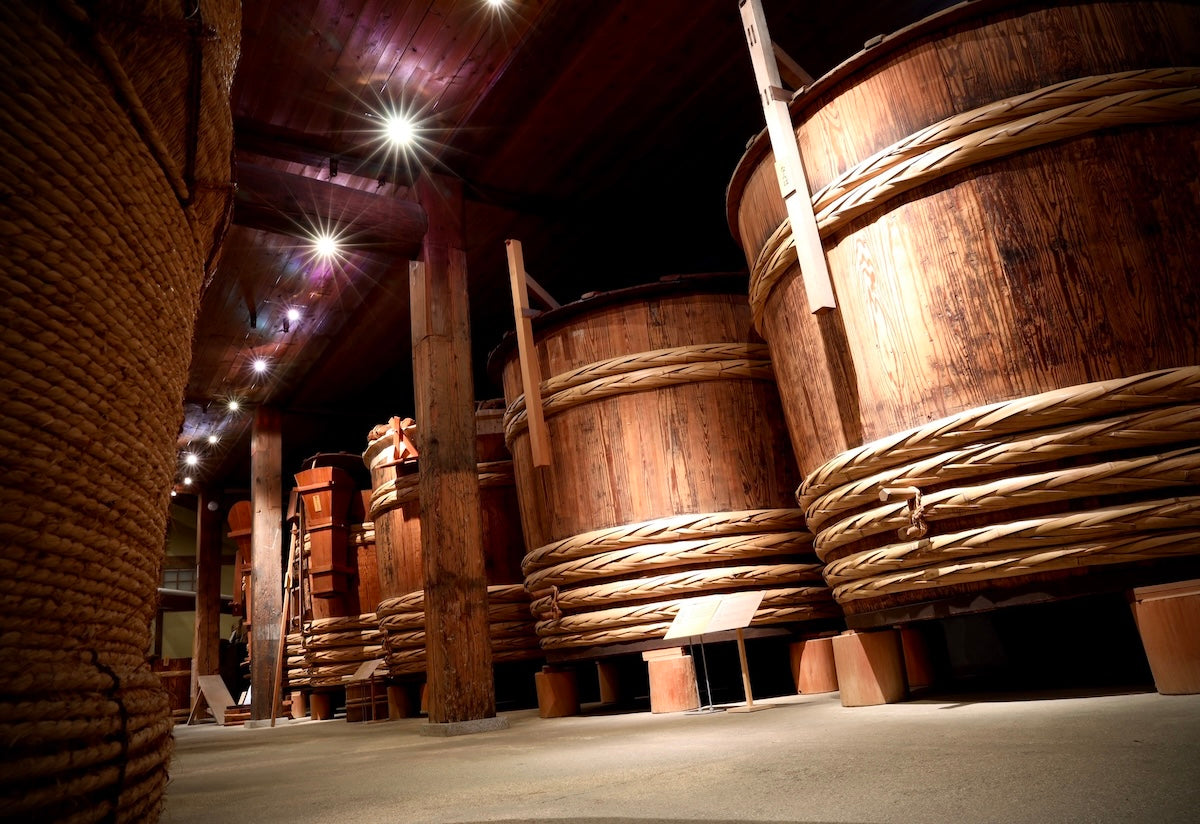
The practice dates back to the Edo period. Winter sake was pasteurized once after pressing, stored through the summer in cool brewery tanks and then - when autumn arrived and outside temperatures fell to match those inside the storage facility - shipped out without a second pasteurization.
What emerged was a different drink from the one that went in. The sharp edges had rounded. The umami had deepened and integrated. The sake had matured.
The Change in Rice Wine - and People
Most drinks today arrive pre-defined. Ice-cold. Extremely flavored. Designed to taste identical regardless of season, setting or company. Sake remains resistant to that approach.
Chilled, it can be sharp, almost crystalline. At room temperature, the balance shifts and hidden layers emerge. Warmed gently, the same sake becomes softer, broader, more savory - as though the drink has relaxed its shoulders.
The freshly pressed shiboritate and the mellowed hiyaoroshi may begin as the same liquid, separated only by time and temperature. Yet by autumn they have become entirely different experiences. One, loud and youthful. The other, quieter, rounder, more settled into itself.
Human beings, you might say, change in much the same way.