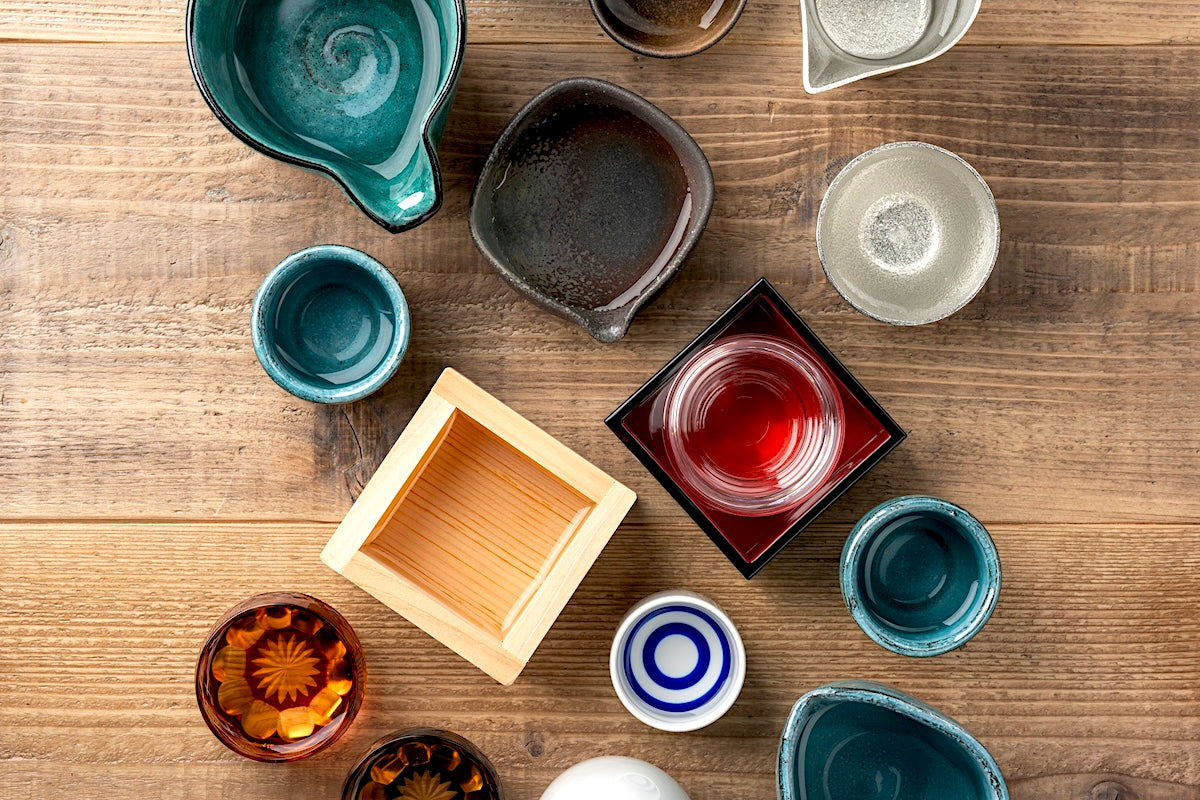
Picking a sake vessel isn’t simply a matter of style; your choice can amplify aroma and flavor - or mute them entirely.
Before you start pairing, take a tour of the sake vessel family tree. The pieces may look small but each one plays a different role in shaping how you drink, smell and even feel the sake.
Main Types of Sake Cups
Ochoko: The Classic Small Sake Cup
If sake vessels had a default setting, it would be the choko, or ochoko. This tiny cup is probably the first thing most people picture when they hear 'Japanese sake'.
It holds only about 40 to 60 ml but this isn’t stinginess; it’s science. Warm sake cools fast and chilled sake warms quickly. With an ochoko, you can finish each pour before the sake temperature shifts, changing the flavor.
When drinking with others in Japan, it’s customary never to pour your own sake - instead, you pour for your companions and they will pour for you.
The size of the choko encourages frequent pouring and receiving, a gesture of hospitality that’s central to Japanese drinking culture.
Kikichoko: The Snake Eye of the Sake World

Step into a sake brewery or tasting session, and you’ll likely see tiny white porcelain cups with thick blue rings at the base.
This is the kikichoko, or janome - snake eye - choko, the tasting cup used by brewers and other sake professionals.
If the blue rings at the bottom of the cup appear sharp and defined through the sake, it means the brew is well-filtered; if they look blurry, the sake may be cloudy or aged.
The pure white background also helps tasters assess the transparency and brightness of the sake, while the shape releases just enough aroma for evaluation.
You can think of the kikichoko as the laboratory beaker of the sake world, but with better aesthetics and offering significantly more job satisfaction.
Guinomi: The Bigger, Bolder Sibling
If an ochoko is a sip, a guinomi is a gulp. Larger than an ochoko, this cup comes with a wider mouth that releases more aroma.
Because it also holds more, you don’t need to keep refilling it and you can appreciate how the sake changes in temperature and flavor over time.
If you’re drawn to traditional Japanese ceramics, guinomi are a bottomless well of fascination. Regional styles, glazes and kiln histories could keep you happily occupied for several lifetimes as you build a collection of favorite cups.
A handmade guinomi with texture also engages your fingers before the first sip; your brain decides it tastes better because your hand already likes it.
Science? Maybe. Pleasure? Definitely.
Sakazuki: The Ceremonial Saucer

The sakazuki is the red carpet of sake vessels - flat, formal and elegant. If you’ve seen a traditional Japanese wedding or a serving of New Year otoso wine, you’ve probably seen it in action.
Sakazuki came into being more than 1,200 years ago, with the lacquered version popular with the nobles of the Heian period (794 -1185).
If you have an umami-strong sake, try drinking it from a sakazuki and see how the sake opens up.
San-san-kudo: The Three-Cup Ceremony
The sakazuki's most ceremonial outing is the san-san-kudo, the ritual at the heart of a traditional Japanese wedding where a shrine maiden pours sake into three saucers for the couple to share.

The name breaks down neatly: three, three, nine times. The bride and groom drink sake three times each from three cups - small, medium and large - for a total of nine sips that formalize their union. Odd numbers are considered auspicious in Japanese tradition and the number nine also sounds like the word for 'long-lasting'.
Each cup in the set has a distinct meaning: the small cup represents the couple's past and their gratitude toward their ancestors, the medium cup, their present commitment to build a life together as husband and wife and the large cup, their future - the prosperity of descendants and the stability of the household.
Taken together, the three cups are also said to embody ten-chi-jin: heaven, earth and humanity, a term encompassing all things in the universe.
Rather than the convivial refill culture that ochoko and guinomi invite, this set asks you to drink slowly and deliberately, each exchange weighted with meaning.
Masu: The Wooden Box of Generosity

Originally, the masu wasn’t a cup at all - it was a box to measure the quantity of rice.
When made of cedar or hinoki - Japanese cypress - these cups add a natural fragrance that pairs well with crisp, dry sake.
In Japanese restaurants, especially izakaya, the masu is sometimes used in mokkiri style: a small glass is placed inside and the sake is poured until it overflows into the box.
This deliberate spill symbolizes abundance and hospitality.
You can sip from the glass, then finish the overflow straight from the masu itself for bonus flavor - and fun.
Wine Glass: The Modern Sake Aroma Specialist
You read that right: a wine glass. Sake sommeliers now use stemware to show off premium sake such as daiginjo or ginjo.
The rounded bowl captures delicate aromas of fruit and flowers, while the narrowing rim concentrates them toward your nose.
If you’re drinking chilled, aromatic sake, skip the ochoko and pour into a wine glass instead. A Burgundy glass works for rich junmai; a Chardonnay glass for lighter styles.
Want to put the sparkle in sparkling sake? Reach for champagne flutes.
A Selection of Sake Pourers
Tokkuri: The Classic Sake Flask
The pourer that launched a thousand toasts, the tokkuri is an all-rounder, appropriate for sake that's served warm, chilled or at room temperature.

The vessel holds enough for a few rounds and its small aperture helps to maintain the sake temperature. The flask also fits easily into a bain-marie for heated sake.
Evolving from larger storage jars, the tokkuri is a reliable workhorse, the little bottle that could.
Choshi and Chirori: The Pourers with a Handle
The choshi, or ochoshi, looks like a fancy kettle, complete with handle and spout. Traditionally used in Shinto ceremonies and weddings, it’s a formal sake pourer, often lacquered or metal.

The chirori, on the other hand, is more utilitarian - usually made of tin or copper and used for gently warming sake in a water bath. Tin conducts heat evenly and is also said to soften any harsh edges in the sake.
Katakuchi: The Open-Spouted Bowl
If the tokkuri is the thermos of the sake world, the katakuchi is the sake carafe - open, elegant and made for easy pouring.
Its wide top increases air contact, letting the sake breathe.
Because it’s open, you can admire the sake’s clarity and color before it's served, which makes the vessel a popular choice at tastings and fine restaurants.
Katakuchi generally come in a variety of materials - ceramic, glass or metal - and their shapes can resemble shells, leaves or flower petals.
Sake Cups and Carafes: A Speed-Date Glossary
Tokkuri: classic ceramic flask; works for warm and cold sake and can go straight into a water bath for heating.
Choshi (or ochoshi): spouted vessel with a handle used in formal settings; it functioned as both warmer and pourer in the Edo period before the tabletop tokkuri took over at home.
Chirori: metal warmer with a handle curved like a cup handle.
Katakuchi: open bowl with pour-spout. Good when you want guests to see the clarity of the sake and enjoy the aroma.
Choko (or ochoko): tiny cup, frequent refills.
Guinomi: medium cup, more aroma.
Sakazuki: saucer style, celebratory.
Masu: wooden box, serve sake with mokkiri flair.
How to Choose Vessels: Capacity, Shape, Material and Sake Type
You bought premium sake - don’t make it do karaoke through a pillow. If the sake isn't singing, switch the vessel before blaming the brewer.
Here's a guide on how shape and material, among other things, affect the flavor.
Choosing by Capacity
Small size = temperature control. Recommended for chilled sake or warm pours where you want each sip at its best.
Larger cups = flavor evolution. Ideal when you want to chart the arc of flavor as the sake cools or warms.
Choosing by Shape
Bowl-shaped: balanced for many styles.
Bud-shaped (narrowed mouth): concentrates aroma - great for rich, aromatic pours.
Straight-walled: cleaner feel, keeps bold aromas from jumping you at the door.
Wide rim: acidity becomes clearer; faster aroma release; flavor spread.
Narrow rim: condenses flavors; holds aromas in.
Thin lip: lighter, drier impression.
Thick lip: sweeter, longer finish.
Choosing by Material
Glass: the material that affects the flavor the least. Thin glasses for delicate sake such as ginjo and daiginjo, thicker for cushier textures. Best for chilled sake.
Ceramic: low heat conductivity, making it excellent for warm or hot sake.
Lacquerware: light, smooth, celebratory and heat-resistant.
Wood: gentle fragrance; nostalgic vibe; masu is still as hip and square as ever.
Tin: quick to warm, said to mellow any rough edges in the sake. Better in smaller sizes so the heat doesn’t flee.
Choosing by Styles of Sake
Another way to choose is by kinds of sake. Here are the four main categories: kunshu, jukushu, soshu and junshu.
薫酒 Kunshu (fragrant with floral or fruit notes; typical of ginjo and daiginjo): use a wine glass or a sake cup with a narrowed neck to enjoy the aroma of the sake.
塾酒 Jukushu (rich flavor and mellow aroma of matured sake): choose rounded shapes that retain aroma and let you sip slowly.
爽酒 Soshu (light, refreshing): serve this drier sake chilled, in glass or ceramic cups that give an impression of coolness.
醇酒 Junshu (full-bodied, umami-rich): great when warmed. Use ceramic or other heat-retaining materials; a cup with a wider mouth would spread the umami better.
Shaping the Flavor of Sake
What's in a container? When it comes to sake, everything. But choosing sake drinking vessels isn’t about rules; it’s about nudging the flavor of the sake you like into its best self.
So if people ask why you own 12 different cups that 'look kind of the same', tell them the truth: they all sip differently. Then serve sake in a variety of vessels so they can taste it for themselves.
By Janice Tay