Introduction
Call it fast food or the quintessential modern lunch. The donburi is the backbone of the salaried workers’ lunch, one of the most important fuels that keeps the engine of Japanese capitalism humming along. All it is is rice topped with a saucy protein of some kind in a single bowl — a doddle to put together and even faster to eat, truly the ultimate in easy, quick meals.
Naturally, the donburi vessel is an entire genre of crockery unto itself. Yes, it’s basically a bowl large enough to contain the entire contents of lunch without overflowing while still looking pretty, but they’re more varied than you might think. Also, finding one that suits your own donburi needs in the kitchen can be surprisingly tricky.
If you believe that bowl food is superior food, you’re in the right place. Read on to find out more about the donburi bowl and the history of how it came into being.

Meet the donburi (and donburi bowl)
Donburi is written with this character 丼. It can refer to the bowl itself — especially when using the term ‘donburi bachi’ (丼鉢). However, it also refers to the rice-bowl dish itself, which is formally called (丼物).
In everyday Japanese dining, donburi condenses the classic structure of a meal — rice, main dish, and sides — into a single bowl, making it a staple of casual restaurants, fast food chains, and home cooking. Some people claim that donburi are nutritionally balanced overall, which is not always true since many rice bowls treat vegetables as an afterthought. But they certainly can be pretty balanced.
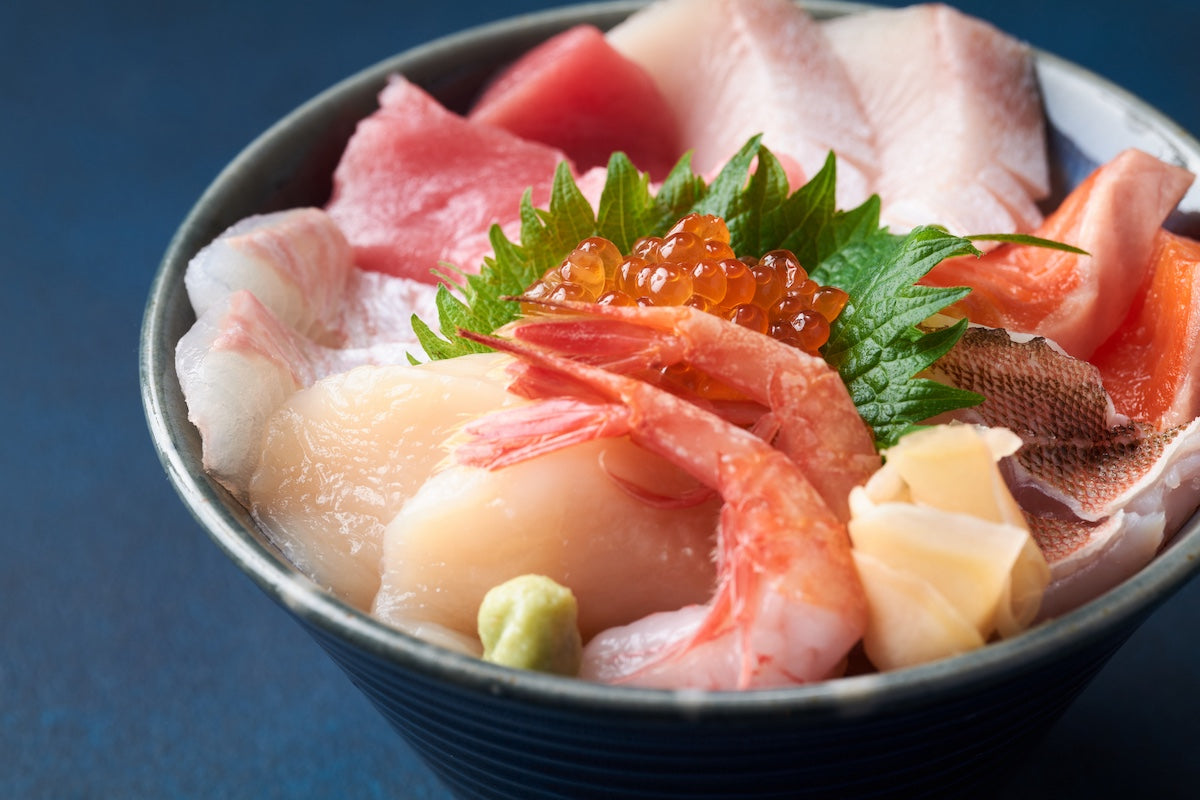
Most toppings can become a -don. As the All Japan Donburi Union (AJDU) says, it is a ‘creative universe unfolding within a bowl.’ Beef on rice? That’s gyūdon. Swap it for some pork and you have a butadon. Tempura on rice? Why, that’s a tendon. (Not to be confused with the other body part.) Mixed seafood on your rice? Kaisendon — literally a seafood rice bowl. Grilled eel with sauce on rice? Una-don, from ‘unagi.’ You get the picture.

Characteristics of a donburi bowl
Now let’s meet the donburi-bachi. At around 15-20cm in diameter and 8-10cm deep, it is noticeably larger and deeper compared to a standard rice bowl. These measurements are guidelines; however, the AJDU has supposedly stipulated that a donburi bowl must have a radius of over 15cm and a height of over 5cm.
Donburi bowls are usually ceramic or porcelain. Some have a small foot ring that lifts the bowl off the table. In practice, their size makes them quite versatile, enabling them to double as noodle bowls, soup bowls, or even side dish vessels. Some donburi bowls also come with their own lids; covering the bowl briefly after plating lets the topping steam and meld with the rice, releasing an appetising fragrance when the lid is lifted at the table.
A quick history of donburi bowls
Early days
According to the AJDU’s (brief) history of donburi, its origins lie in a Muromachi period temple dish called ‘Hōhan,’ rice topped with vegetables and soused in a clear broth. However, they say, donburi are an urban culinary phenomenon, having developed directly in response to consumer demand for quick meals. This is perhaps why they didn’t truly come into being until the Edo period, which marks one of the most rapid periods of urbanisation in Japan’s history.
One of the earliest written reference to donburi bowls appears in Sodenshi Sankei’s『男重宝記』Otoko Chohoki (Handbook for Men), a practical guide published during the Genroku era (1688-1703) where the word ‘donburi 丼’ referred to the name of a vessel used for soba, either plain or with toppings. These bowls were most likely used in various ways — side dishes, toppings, sweets — before they became closely tied to rice.
Another theory for the origin of donburi links it to kendon-ya 慳貪屋, cheap Edo-period eateries that served one bowl meals. The vessels used here were called kendonburi-bachi 慳貪振り鉢, which is thought to have contracted over time to donburi-bachi.
By the 1780s, a ‘modern donburi-type vessel’ had developed. This was a bowl with a small foot and wide mouth, ideal for serving all kinds of foods from dumplings to noodles. They seem to have been especially prevalent in soba shops for hot noodle dishes. In the first few decades of the 1800s, dishes like unadon began to appear in written sources, followed by tendon and Fukagawa-don (clams and negi over rice, so named for the east Tokyo neighbourhood in which it was invented).
Entering the modern era
From the Meiji period (1868-1912) onwards, donburi became the city dweller’s fast food of choice, cementing its place in Japan’s culinary landscape. The turn of the 20th century is when iconic donburi variants familiar to us emerged: oyakodon, the chicken-and-egg rice bowl; gyudon, which developed from beef hotpot and sukiyaki culture; and later on in the 1920s, katsudon, rice topped with a whole deep-fried pork fillet.
As these dishes spread, the physical donburi vessel itself slowly standardised into the form we recognise today. Bowls became larger and deeper, and were built to retain heat. They tended to be durable, stackable bowls with robust rims and enough depth for rice, toppings, and sauce — ideal for constant use in busy restaurants.
Around the same time, the rise of take-out (demae) and quick service also drove the adoption of lidded donburi bowls. More and more, busy workers had such meals delivered to their homes or workplaces, so shops began using lids to keep food hot and prevent spills. The toppings would steam with the rice underneath until the lid was lifted at the table or office desk. By the mid- to late Meiji period, donburi had become synonymous with cheap, fast, filling Japanese meals.

Modern donburi
Today, there’s a huge variety of donburi bowls out in the market. They have kept their signature depth and width, but come in all kinds of styles, shapes, and decorations for every kind of diner out there.
Donburi producers adjust the proportions of their bowls for specific donburi — for instance, slightly broader for gyūdon, taller for tendon, or wide and open for seafood kaisendon so the sashimi can be seen clearly from above. There are also smaller ‘mini-don’ bowls for children, people with smaller appetites, or shops that have mini-don sets, which allow people to enjoy a variety of toppings without committing to a single huge portion.
Donburi designers have also leaned into the visual appeal of the bowls themselves. Some bowls display gorgeous interior patterns and glazes that frame the food beautifully. You might see bold rims, contrasting colors in the well of the bowl, or subtle textures that make rice and toppings look even more abundant when viewed from above. For specialty bowls—tempura don, tendon, kaisendon—the inner design often reinforces the theme, such as wave motifs for seafood or subdued tones for classic tempura.
The lids on modern donburi bowls usually have a functional twist, doubling as a second plate ideal for resting tempura, pickles, or toppings before mixing them into the rice.
Many everyday bowls are now made from high-fired ceramic with excellent heat retention, often microwave- and even dishwasher-safe. Perfect for busy households. There are also mass-market variants made from lightweight ceramic or plastic, touted as inexpensive and microwave-safe.

How to choose a donburi bowl
Choosing a donburi bowl is mostly about matching the bowl to how you actually eat: portion size, types of dishes, and how you like it to feel in your hands.
For a flexible first donburi bowl, one that measures around 15–16 cm in diameter and 8–10 cm deep is a safe bet — enough for a proper rice bowl with toppings without feeling oversized.
Smaller bowls (around 13–14 cm) work well for children and lighter eaters, while larger ones (18–20 cm and up) edge into ramen/udon territory or very hearty portions.
If you mainly eat rice bowls, slightly deeper, more vertical bowls will keep those toppings in an attractive heap. But if you want your donburi to do double duty as a soup noodle bowl, choose a vessel that’s a bit wider and more open, so there’s more surface area.
What’s the best material for a donburi bowl? Most of them are made from ceramic or porcelain because they’re durable, retain heat well, and are comfortable to hold. After that, it’s down to personal preference. Porcelain, such as Imari or Arita ware, can make a simple donburi feel rather elegant. Thicker, more rustic stoneware is great for everyday use, since they’re warm and earthy. Whatever you choose, take Marie Kondo’s advice — it should spark joy, since you’ll be using it all the time.