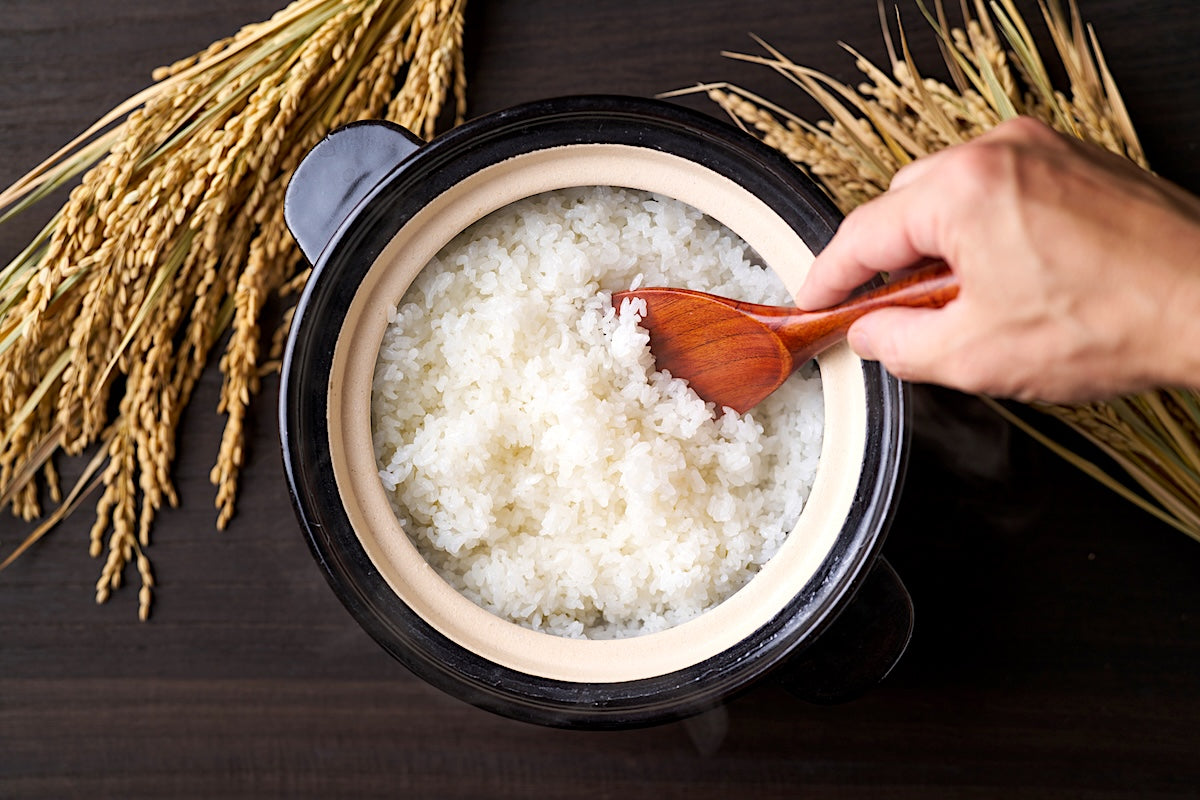
Many food cultures treat their staple carbohydrate as a vehicle, a canvas. In Japan, the relationship is reversed. The word for side dish, 'okazu', is usually written using the hiragana syllabary but its kanji characters (御数 or 御菜) point to its subsidiary position: these are things, the many - kazu - things that go with rice.
At a traditional Japanese table, rice is placed at the front left: the position of highest honor. Everything else arranges itself around it.
That structure, known as ichiju sansai - one soup, three sides - has endured through every wave of outside influence and every convenience-store reinvention. The soup changes, the sides evolve but the rice remains.
Donburi dishes could be seen as a compressed version of this spread: various toppings served over a bowl of rice, the flavors of the topping seeping into the grains beneath so that, by the time you reach the bottom of the bowl, the rice has absorbed everything the dish had to offer.
The Donburi: Japan's Original Rice Bowl
It's easy to see why the donburi ranks among Japan's most popular dishes. Simple enough to be assembled in minutes, it's also flexible enough to accommodate nearly any ingredient and forgiving enough that even a mediocre version is satisfying.
Its origins lie somewhere in the Muromachi period (1336-1573), when a dish called 'hohan' - vegetables and broth poured over rice - seems to have established the basic logic: rice and toppings as a single, unified meal rather than separate components. Upper-class diners of the era ate their rice and side dishes apart; combining them was considered a working-person's shortcut.
The classic canon today includes five main types.
Oyakodon pairs chicken and egg simmered in a dashi broth that is sweet, savory and gentle all at once.
Gyudon layers thinly sliced beef and onions simmered in a sweet-salty sauce over rice; it arrived with the Meiji period's enthusiasm for beef and became the template for Japan's fast-food industry. Yoshinoya, founded in 1899, has been serving essentially the same bowl ever since.

Katsudon - pork cutlet simmered in a soy-based broth and finished with egg set just past runny - has at least three competing origin stories and one active regional dispute: Fukui prefecture maintains that the original katsudon used sauce, not egg.
Tendon dips crisp tempura - shrimp and seasonal vegetables - in a sweet-savory sauce before arranging it on steaming rice. Unadon features grilled eel glazed with a dark, caramelized tare, a dish Japan has long associated with stamina and restoration.
Kaisendon - the seafood rice bowl - arrived only in the 1950s. It's said to have originated in Hokkaido and is the format that lets tuna, salmon and salmon roe speak for themselves. Unlike sushi, kaisendon requires neither vinegar-seasoned rice nor a trained itamae; the point is pure flavor from the freshest catch available.
Ochazuke: The Best Thing to Eat at Midnight
There are dishes you plan for and dishes that simply appear when the situation demands them. Ochazuke falls in the second category.

The dish is almost insultingly simple: hot tea or dashi broth poured over cooked white rice, with toppings such as umeboshi, grilled salmon or salted kelp, and finished with wasabi, sesame seeds and nori. It can be assembled in the time it takes the kettle to boil. In Kyoto, the dish is called 'bubuzuke'; elsewhere, it is ochazuke, and it has been eaten in one form or another since the Heian period.
The original version was hot water poured over rice - a way of making cold leftover rice palatable at a time when refrigeration was not an option and fuel for cooking fires was precious.
Ochazuke made with brewed tea rather than plain water arrived when sencha became widely available in the mid-Edo period.
The tea contains theanine, an amino acid associated with calm and relaxation; the broth is warm and hydrating; the whole thing is light enough to eat - and digest - before sleep.
Ochazuke is also a popular 'shime' - the gentle, closing note that signals the end of a meal, whether at home or after a night out. Japanese green tea and hojicha both work; genmaicha, with its toasted rice character, adds a layer that feels appropriate given the context.
Japanese Rice and the Logic of Washoku
That classic washoku structure - 'ichiju sansai', one soup and three sides - makes rice the center from which everything else is calculated.
There is a specific Japanese concept for how to enjoy the side dishes: 'kochu chomi', or 'seasoning within the mouth'. Okazu sides are designed to be completed when eaten together with rice, the salt and umami of the accompanying dish combining with the mild sweetness of the steamed rice to create a balance that neither component achieves on its own.
Plain rice also serves as a palate reset, softening the lingering saltiness or richness of a previous bite.
Shin-mai, newly harvested rice available only in autumn, turns the grain into a seasonal delicacy: prized for its moisture, freshness and particular sweetness and displayed in supermarkets the way a wine region might announce its new vintage.
Regional Rice Dishes Across Japan
Japan's rice culture becomes most itself at its geographic extremes.
In Hokkaido, the cold northern island that accounts for much of Japan's seafood production, the defining rice dish is the uni-ikura don - a bowl piled with sea urchin and salmon roe, sometimes both varieties of uni at once (bafun uni, dense and intensely flavoured; murasaki uni, lighter and more delicate), the roe glistening in its salt cure or soy cure beside it.
Hokkaido also claims ikameshi - whole squid stuffed with rice and simmered in a sweet-soy glaze, first made famous as a railway station bento.
In harako-meshi - the pride of Miyagi prefecture - rice is cooked in a rich salmon broth then topped it with both salmon fillet and roe.
At the southern end of the archipelago, jushi takes the concept of mixed rice in an Okinawan direction. Kufua jushi (the firm version; similar to takikomi gohan) is cooked with ingredients such as pork belly, hijiki seaweed and carrot in pork broth; yafuara jushi (the soft version) is closer to porridge.
Jushi appears at Okinawan weddings, funerals, the Bon festival and the winter solstice, when a version is made with a red taro that represents good fortune and prosperity for the family. Jushi is also served at breakfast because not every dish needs a special occasion.
Onigiri: The Rice Ball That Fed an Army - And Still Does

The history of onigiri stretches back to Japan’s agricultural beginnings. At an archaeological site in Nakanoto town in Ishikawa prefecture, researchers uncovered carbonized rice lumps dating back to around the 1st century CE. These are often described as the oldest onigiri fossils in Japan.
In that era, rice balls were used as offerings in rituals: proof that, even in ancient Japan, rice was never merely food.
By the Kamakura and Sengoku periods, onigiri had marched onto the battlefield. Portable, filling and easy to eat, they became ideal rations for samurai who needed quick energy.
In Niigata, legend claims that warlord Uesugi Kenshin speared a cold rice ball with his sword, brushed it with miso and grilled it into what became known as kensan-yaki: an example of how samurai did outdoor cooking.
Peace in the Edo period (1603-1868) transformed onigiri from military fuel into the people’s travel companion. Known widely as nigiri-meshi, rice balls accompanied commoners on pilgrimages, picnics and journeys along the highways of Tokugawa Japan.
As domestic travel culture flourished, so too did portable meals. Advances in seaweed cultivation during this era led to the familiar practice of wrapping onigiri in nori, creating the form that would become one of the defining icons of Japanese everyday food culture.
From the late 1970s, onigiri entered a new phase of its history: the convenience store age.
The triangular shape widely associated with onigiri was not the historical default: before 1978, four distinct regional forms competed more or less evenly. In that year, Seven-Eleven Japan introduced the triangular onigiri with a film packaging system that kept the nori separate from the rice until the moment of eating, preserving the seaweed's crispness. The triangle won by distribution, lining refrigerated shelves across Japan and turning an ancient portable meal into a national daily habit.
In recent decades, onigiri - also known as omusubi - has traveled far beyond Japan, appearing in convenience stores as well as specialty shops. Much as ekiben have transformed railway journeys into edible tourism, onigiri has become a small ambassador of Japanese food culture: simple in appearance but delivering centuries of history right into your hand.
What Goes Inside: Classic and Unexpected Onigiri Fillings
The best onigiri fillings share two qualities: relatively low moisture content and a strong enough flavor to season the rice they are buried in.
The classics endure for straightforward reasons. Umeboshi - pickled plum - brings acidity and salt in a form that suppresses bacterial growth, which explains why it has been the traveler's and soldier's filling of choice for centuries.
Grilled salmon adds savory salinity that seeps gently into the surrounding rice. Okaka - bonito flakes worked through with soy sauce - is essentially a portable application of dashi logic: the same flavor foundation that underlies most Japanese cooking, compressed into something you can eat standing up.
Tuna mayo, a combination of tinned tuna and Japanese-style mayonnaise, arrived later but has become a canonical filling.
For something less expected: a mixture of tenkasu (tempura scraps), aonori seaweed flakes and mentsuyu broth delivers a rich, savory punch. Shiso leaf and miso combined produce something bright, fermented and fragrant.
Furikake - the dry seasoning blends of sesame seeds, dried fish, nori flakes and other ingredients - can be mixed into the rice itself before shaping, eliminating the need for a filling entirely and giving the whole onigiri an even distribution of flavor.
How to Make Onigiri at Home
Making onigiri at home requires no special equipment though an onigiri mold - a small plastic press in triangle or cylinder shape - can help if you're new to shaping the balls. The more important variable is the rice.
Use Japanese short-grain white rice - the stickiness of this rice when cooked is what allows the ball to hold its shape; long-grain rice will not work.

Begin shaping the rice while it's still hot - not warm; hot. Rice that has cooled too far loses the slight pliability that makes the ball cohere and you will find yourself squeezing harder to compensate, which produces a dense, compressed onigiri with none of the airy texture the best ones have.
Here's a step-by-step guide for triangular onigiri: wet your hands with cold water and spread a small amount of salt evenly across both palms - this seasons the surface and prevents the rice from sticking.
Place about 100-120g of hot rice into your dominant hand and press a small indentation into the center. Add the filling and cover it completely with more rice. Gather the onigiri gently into a loose round shape first, then use the fingers of your dominant hand to form the three corners while rotating the ball two or three times. Gently press - never squeeze - to consolidate the shape.
If the onigiri is for immediate eating, wrap the entire ball firmly in nori so the seaweed softens slightly and melds with the rice's surface.
If it is going into a bento box for later, keep the nori separate and wrap it around the rice at the moment of eating, convenience-store style, so the seaweed stays crisp.
Avoid refrigerating the onigiri if possible. Cold storage firms the rice into something denser and less pleasant; onigiri are at their best when eaten within a few hours of making.
If you must store the rice balls in the fridge, wrap them tightly in plastic and bring them back to room temperature before eating, or warm them briefly.
The last thing to remember: onigiri rice balls are not sushi. It requires no vinegar, no particular technical skill and no special occasion. It is rice, shaped by hand, filled with something good. Japan has been eating it for two thousand years without needing a better reason.