When an egg comes out of its shell, it does eggstraordinary things.
Baked, poached, fried, steamed, even pickled - it turns up in dishes that range from humble comfort food to high culinary theater. Japan, in particular, has given the egg a particularly varied career, showcasing it in breakfast bowls, bento boxes, noodle dishes, sushi counters, onsen resorts and dessert shops.
Whether rolled into a delicate omelet or slow-cooked in a mineral-rich hot spring, the egg in Japan is never just breakfast.
The Egg in Japanese Cuisine
Japanese egg cuisine draws from two distinct but intertwined traditions. The first is the culture of eating raw eggs, made possible by some of the strictest hygiene standards in the world. The second is a lineage of cooked egg dishes that developed from the Edo period (1603-1868), eventually absorbing Western influences to produce a range of flavors and forms.
Among the most beloved cooked egg dishes in Japanese cuisine is onsen tamago - literally, hot spring egg.

Slow-cooking shell-on eggs in geothermal springs produces a silky white encasing a warm, runny yolk - the two textures held in a delicious tension.
Then there's tamagoyaki, the rolled Japanese omelet found everywhere from high-end sushi counters to humble bento boxes. Its cousin, dashimaki tamago, is a Kyoto-style variation seasoned with dashi broth, giving it a savory depth that sets it apart from the sweeter style favored in eastern Japan.
Both are cooked layer by layer in a rectangular pan, the thin sheets of egg folded over themselves to produce a tender, multi-layered slice.
Even softer is chawanmushi, a savory egg-and-dashi custard served in a small cup or bowl. Part of the pleasure lies in lifting the lid to uncover delicacies such as shiitake mushrooms, ginkgo nuts and fish cake arranged on the smooth, pale surface.

The silky texture comes from a carefully maintained ratio of dashi to egg - 3:1 or 4:1 - and from gentle, low-temperature steaming that prevents the custard from curdling.
Chawanmushi shares its fundamental cooking principle with custard pudding: both dishes rely on the heat coagulation of eggs to produce a smooth, spoonable texture.
The differences, however, are clear: chawanmushi is seasoned with dashi and salt, making it a savory side dish, while pudding is built on eggs, milk, sugar and caramel. Japan’s take on this Western custard - known in Japanese as purin - has become one of the country’s most popular desserts, not to mention the subject of countless YouTube tutorials for home cooks.
Safety First (and Always): Raw Eggs and the Japanese Standard
For most of the world, eating raw eggs is something done by the very brave or the very drunk. In Japan, it's just breakfast.
The everyday consumption of raw eggs rests on a rigorous food safety system. Hygiene management begins at the poultry farm itself, where chicken houses are regularly disinfected and wild animals are kept away from flocks through strict measures. After collection, commercial eggs pass through specialized centers where they are thoroughly washed, sterilized and sorted.
The result is a salmonella contamination rate exceptionally low by global standards - around 0.0027% for commercial eggs. The best-before dates for eggs in Japan are also set specifically for raw consumption, meaning that the eggs on your supermarket shelf have been certified safe to eat uncooked within that stated window.
This system supports a range of dishes that would be unthinkable in many other food cultures. In sukiyaki, thin-sliced beef and vegetables are dipped into a bowl of raw beaten egg before eating. In tsukimi udon, a raw egg is cracked directly into a bowl of hot broth. And then there's tamago kake gohan - more on this below.
That said, even given Japan's high safety standards, some common-sense precautions still apply: avoid cracked eggs, keep eggs refrigerated at 10°C or below and consume them before the best-by date. Infants, elderly individuals and the pregnant are generally advised to eat their eggs cooked.
Tamago Kake Gohan: Japan's Classic Breakfast
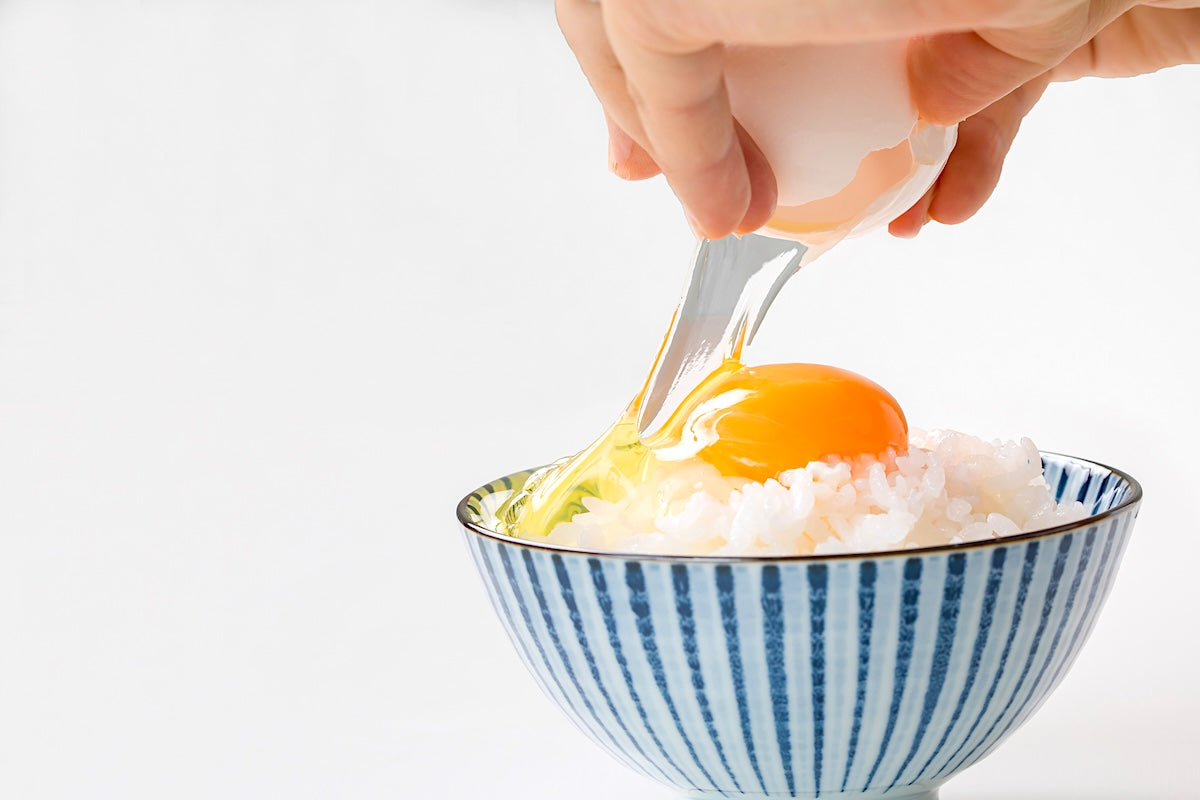
Tamago kake gohan - affectionately shortened to TKG - is so simple that is recipe barely qualifies as one: just crack a fresh egg over hot rice, add soy sauce and stir.
Yet its simplicity holds a certain magic. The heat of the rice partially warms the egg without cooking it, the yolk enriches the rice with a creamy, velvety coating and the soy sauce concentrates the natural umami of both ingredients into a breakfast that keeps generations of Japanese coming back.
Popularized in the late 19th century, TKG has evolved well beyond its bare-bones origins. Many Japanese customize their TKG with toppings such as sesame seeds, bonito flakes, seaweed or salmon flakes. Some people even buy soy sauces designed specifically for the dish.
What began as a humble dish of rice and raw egg has become a national institution.
Making Tamagoyaki: An Omelet on a Roll

Visitors to Japan who are hesitant about eating raw eggs - a perfectly reasonable position to hold - should look for tamagoyaki: a cooked alternative that's a staple of Japanese bento boxes, a fixture on sushi menus and a common breakfast item, especially at traditional inns.
In fact, if you're staying at a ryokan or minshuku and you let the staff know that you prefer not to eat nama tamago, you will very likely be served medamayaki - a fried egg - or tamagoyaki in place of any raw egg at breakfast.
Made by frying and rolling a seasoned egg mixture layer by layer in a rectangular pan, tamagoyaki takes on different personalities across Japan.
In the east, it leans sweet, with sugar as the dominant note; in Kyoto and the rest of the Kansai region, it's flavored with dashi, which gives it a softer, more delicate texture - as well as its name, dashimaki. But both styles produce a multi-layered slice that's as much about tenderness as it is about flavor.
Tips for Rolling Tamagoyaki Like a Pro
Ask any Japanese chef what separates a good tamagoyaki from a great one and the answer will almost certainly involve three things: how you mix the eggs, how often you oil the pan and how you time the roll.
Mix with care, not vigor. Crack the eggs into a bowl and use chopsticks to blend the whites and yolks together, keeping the tips of the chopsticks touching the bottom of the bowl throughout. The goal is to cut through the egg whites rather than whisk them, producing a smooth, uniform egg mixture without incorporating excess air or foam. Bubbles are the enemy of a clean omelet surface.
Tamagoyaki recipes will tell you to preheat a rectangular pan over medium heat and apply a thin layer of oil before you pour the first layer of egg mixture in. Crucially, re-oil the pan each time before you add a new layer. This prevents sticking and helps the finished omelet to roll cleanly.
Timing is crucial: roll the egg while it's still slightly runny. This is the step that most beginners get wrong because it feels strange to roll an omelet that isn't fully set. But this is what creates the characteristic softness of a well-made tamagoyaki. Overcooking at this stage leads to dry, separated layers - and a tamagoyaki that looks like a domestic science experiment.
For the rolling itself, pour about a third to a quarter of the egg mixture into the pan. Use chopsticks to pop any bubbles that form and cook until the surface is mostly set but still slightly soft.
Roll the egg from the far end of the pan toward you to form a log, then push the log to the back of the pan. Oil the now-empty portion of the pan, pour in the next layer of egg and lift the rolled log slightly so that the fresh egg flows underneath it before you roll again. Repeat until all of the egg mixture is used.
A few more tips: tilt the pan slightly when rolling to help the omelet flip forward, press the finished omelet gently after each roll to close any air pockets, and don't stress over uneven patches on the surface because each new layer of egg will cover them.
If you want a particularly fluffy texture, add a small amount of mayonnaise to the egg mixture before cooking.

Once finished, wrap the tamagoyaki while it's still warm in a bamboo rolling mat or plastic wrap to help it hold its shape.
Onsen Tamago: When Eggs Bathe in Hot Springs
No survey of Japanese egg dishes would be complete without discussing onsen tamago, the soft-cooked egg that owes its existence to the country's abundance of geothermal springs.
Today, the method of leaving eggs to cook in hot springs has been domesticated but the science remains the same.
The magic of onsen tamago lies in the different gelling reactions that cause egg whites and yolks to set at different temperatures. The yolk begins to thicken at around 65-70°C, while egg whites don't firm up until closer to 75°C.
By heating shell-on eggs in water held at 65-70°C for 25-30 minutes - below the white's setting point - you produce an egg with a creamy, almost fudgy yolk and a softly set, silky white that has barely thickened.
The texture is unlike anything a boiled or poached egg can offer: runny and velvety yet cooked in the technical sense.
Making onsen tamago doesn't require a thermometer or a hot spring. The simplest approach is the boiling-water-plus-cold-water method: boil one liter of water, turn off the heat, add 150-200 ml of cold water to bring the temperature down to the 65-70°C range, and gently lower refrigerator-cold eggs into the pot.
Cover and leave undisturbed for 15-30 minutes depending on the thickness of the pot (less time is needed with heavy pots as they retain heat longer). Then briefly chill the eggs in cold water before peeling or cracking them open.
Onsen tamago can be enjoyed on their own but they also pair beautifully with dishes that benefit from a soft, luxurious egg element: ramen, udon, salads, rice bowls, simmered vegetables and meat dishes. The runny yolk mingles with whatever it touches, enriching broths and sauces.
Let's Get Cracking
From the raw simplicity of tamago kake gohan to the precision needed for onsen tamago, Japanese egg dishes span a wide range of technique, texture and tradition.
Whether you're a first-time visitor to Japan navigating a ryokan breakfast, or a home cook looking to add a dish to your repertoire, tamago cuisine rewards every level of curiosity and every level of appetite.
Explore with great eggspectations.
By Janice Tay