For roughly 1,200 years, eating beef in Japan was officially illegal. Not discouraged. Not frowned upon. Illegal.
The edict came in 675 CE, when Emperor Tenmu prohibited the consumption of cattle, horses, dogs, monkeys and chickens - a decree shaped by Buddhist teachings on the sanctity of living things. The ban was formally lifted only in 1871, when the Meiji government, busy dismantling everything the previous era had built, added meat prohibition to the list of things Japan no longer needed.
Emperor Meiji ate beef publicly in 1872; an act covered by the newspapers of the day. The country took notice. Within five years, Tokyo alone had more than 500 gyunabeya - beef hot pot restaurants - and what had been officially forbidden for 12 centuries became, with startling speed, a symbol of modernity.
Japanese Meat: The History Behind Tender Beef
The ban existed on paper for over a millennium but beef never entirely disappeared; commoners and members of the elite alike continued to consume meat on the sly or, at least, euphemistically.
Deer was rebranded as momiji - literally, red leaves - because a hanafuda playing card depicted deer with maple leaves. Wild boar became yamakujira - mountain whale - because it was considered similar in color and texture to whale.
The real transformation came with the Meiji Restoration of 1868. The adoption of beef by the Japanese navy, the explosion of gyunabe restaurants in Tokyo and the arrival of Western cuisine in the port cities of Yokohama and Kobe all arrived within a decade of each other.
Gyunabe - beef and green onions simmered in miso or soy sauce broth - was the gateway dish. It evolved into the more refined sukiyaki, shedding the miso and acquiring a more elegant sweet-savory sauce.
Meanwhile, in the background, breeders were at work. Between 1868 and 1887, as the new Meiji government flung Japan's gates open, some 2,600 foreign cattle arrived on Japanese shores. These imported beasts were crossed with native Japanese cattle in an ambitious national experiment.
These hybrids were officially classified as Improved Japanese Cattle, though what constituted 'improved' varied considerably. Local governments were left to decide breeding goals for themselves, which meant that different regions pursued different ideals of bovine perfection. Some favored strength. Others prized size. Some, eventually, became obsessed with fat in ways that would have baffled earlier generations of Japanese farmers who had viewed cattle primarily as agricultural laborers rather than dinner.
Out of this brief but transformative era of cross-breeding emerged four officially recognized wagyu breeds: the Japanese Black, the Japanese Brown, the Japanese Polled and the Japanese Shorthorn.
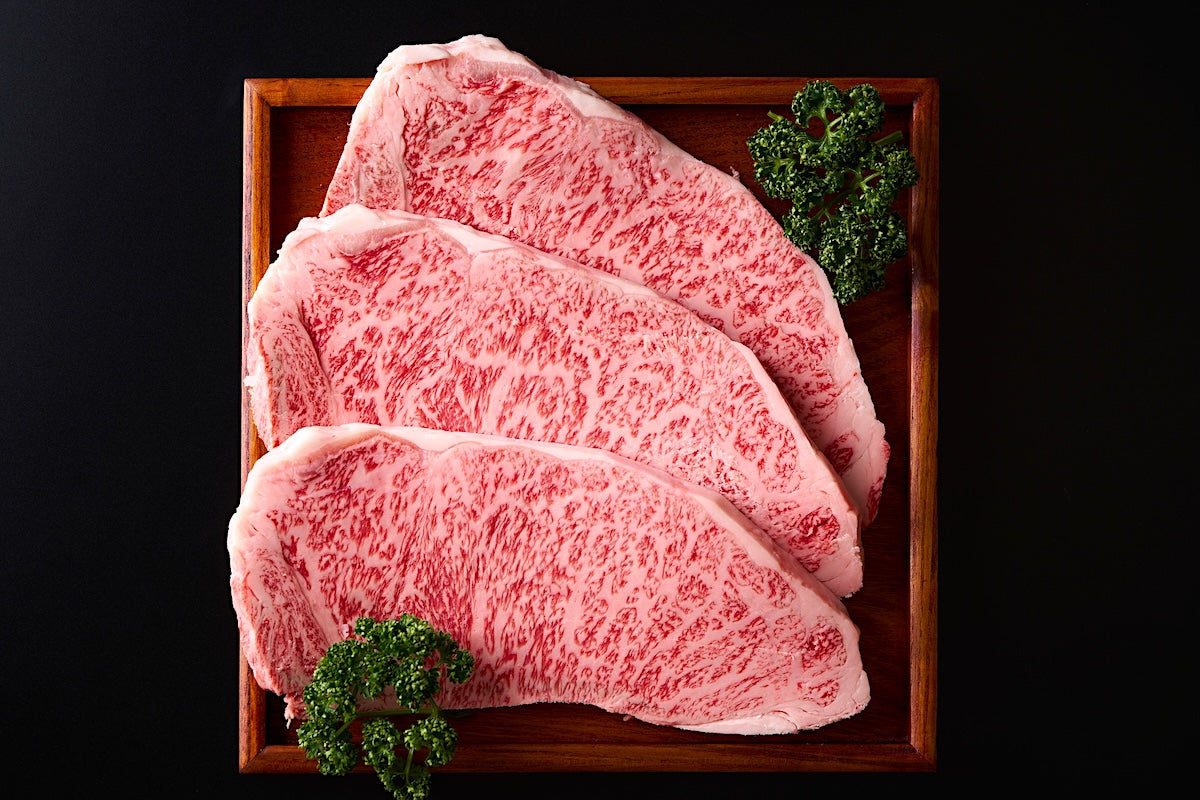
Of these, the Japanese Black would come to dominate the industry, eventually accounting for roughly 95 per cent of all wagyu beef produced in Japan. The fame on this particular breed rests on its intricate fat marbling, threaded delicately through the muscle like frost patterns on a winter window. When heated, this fat melts at low temperatures, producing meat so soft and rich that a sector of Japanese tourism now revolves around the act of chewing it slowly while making noises of astonishment.
Within the Japanese Black breed itself, however, regional distinctions remain fiercely important. One especially celebrated lineage is the Tajima strain from Hyogo prefecture. Only cattle of this strain, raised within Hyogo under strict standards, may legally be sold as Kobe beef. Matsusaka, Omi and Yonezawa beef, as well as most of Japan's other celebrated branded wagyu, likewise come from Japanese Black cattle.
What A5 Actually Means

The wagyu grading system administered by the Japan Meat Grading Association is built around two axes: a yield grade (A, B or C, measuring how much usable meat a carcass produces) and a meat quality grade (1 through 5). The familiar A5 designation means the animal scored at the top of both. About 80 per cent of wagyu earns an A for yield; roughly 20 per cent of that reaches quality grade 5. So A5 is genuinely rare.
The quality grade is determined by four criteria: fat marbling, meat color, firmness and texture, and fat color and quality. Each is scored on a five-point scale, and the final grade is set by whichever score is lowest. Score 5 on three criteria and 4 on one, and the meat is graded 4. No averaging, no rounding up. One weak score closes the door.
Marbling is assessed using the BMS - Beef Marbling Standard - which runs from 1 to 12. A BMS of 1 means almost no visible fat; 12 is the ceiling, a cross-section so dense with fat that the red meat appears to be floating in it. Grade 5 requires a BMS of 8 or above.
Here is what A5 does not measure: flavor. The grading system was designed for fair commercial trading, not restaurant recommendation. Many professional chefs consider Grade 4 wagyu - BMS 5 to 7 - the better cooking range: enough marbled beef to deliver wagyu's characteristic sweetness and umami but without the heaviness that can come with extreme fat content. The price gap between A5 and A4 has been narrowing steadily for years; the market appears to be arriving at a similar conclusion.
A5 is a production standard. What it tastes like is still up to the cook.
The Hot Pot Divide: Sukiyaki, Shabu-Shabu and the Difference
Sukiyaki and shabu-shabu are both Japanese hot pot dishes involving thinly sliced beef, a shared pot and people gathered around a dining table. Where they differ is in the questions they pose.
Sukiyaki asks: how rich can we make this? The warishita - a sauce of soy sauce, mirin, sake and sugar - coats everything in the pot with a deep, sweet-savory glaze. The beef slices absorb it. So do the tofu, the shirataki, the negi, the chrysanthemum greens and the shiitake mushrooms.
When a piece of meat comes out of the pot, you dip it into beaten raw egg before eating - the egg cools the heat slightly and wraps the savory sukiyaki sauce in something softer.
There's also a geographical argument built into every sukiyaki meal. In Kansai, beef fat is melted in a cast iron pan first, the wagyu slices are seared directly in it, and sugar and soy sauce are added to the meat before any liquid. The sauce builds around the beef.
In Kanto-style sukiyaki, the warishita goes in from the start, everything simmers together and the cooking is more of a braise than a sear.
The finishing move is cooked udon noodles dropped into whatever warishita remains: the shime, the closer, is a memorable bowl of noodles.

Shabu-shabu is asking a different question entirely: what does the beef actually taste like? Thin slices of meat are briefly swished through simmering kombu dashi, shabu-shabu being the name given to the sound of that motion.
The meat is eaten the moment its color shifts from raw to just-cooked. There is no warishita, no sugar and soy sauce and no egg, just ponzu or sesame sauces. The broth does almost nothing to the meat; the meat does everything to the broth, enriching it course by course until the shime arrives - usually rice porridge or ramen cooked in what remains.
When the West Arrived on the Plate
Not all Japanese beef culture runs through the hot pot. The Meiji period brought yoshoku - Western food interpreted through a Japanese lens - and beef came with it. Curry rice, beef stew and hayashi rice all arrived in the wake of the Meiji opening and were adjusted to suit rice and soy sauce.

The most successful of the yoshoku beef dishes is hambaagu - the Japanese hamburger steak, which should not be confused with a hamburger. Hambaagu is served on a plate, not in a bun. It uses a mix of beef and pork mince, combined with onion, panko breadcrumbs and egg, and is served with rice.
The military spread the dish across the country in the early 20 century through navy and army cooking manuals; returning soldiers brought the taste back with them and it has been a popular Japanese home staple ever since.
Make Sukiyaki at Home: Kansai and Kanto Region Versions
The warishita can be made the day before - it deepens overnight - but the cooking itself happens at the table, which means the cook gets to eat while everyone else does.
Classic Sukiyaki
Serves 2-3
Ingredients:
- 200-300g wagyu beef, cut for sukiyaki (thin slices, slightly thicker than shabu-shabu beef)
- 1 block grilled tofu (yakidofu), cut into pieces
- ¼ napa cabbage, cut into wide strips
- 1 long green onion (negi or Tokyo negi), sliced diagonally
- 1 pack shirataki noodles, rinsed with boiling water
- 4-6 shiitake mushrooms, stems removed
- A handful of enoki mushrooms
- 1 piece beef suet
- 1 raw egg per person, for dipping
- dashi, as needed
Warishita:
- 4 tbsp soy sauce
- 4 tbsp mirin
- 4 tbsp sake
- 2 tbsp sugar
Make the warishita first: combine all four ingredients in a small saucepan, bring to a simmer, stir until the sugar dissolves, then remove from heat. Set aside or refrigerate overnight.
For Kansai-style sukiyaki: heat a cast iron sukiyaki pan or heavy skillet at the table. Melt the beef suet until the pan is glossy. Lay the wagyu slices in one at a time and sear briefly.
Add a spoonful of sugar directly to the meat, then pour in a small amount of the warishita. Once the beef is just cooked, dip it into beaten raw egg in your individual bowl and eat immediately. Use pasteurized eggs if you prefer.
Add the napa cabbage, tofu, shirataki, shiitake mushrooms, enoki mushrooms and negi to the pan; add the remaining warishita and simmer together, adjusting with a splash of dashi if the sauce reduces too far.

For Kanto-style sukiyaki: pour the warishita into the pan first, bring to a simmer, then add all the meat and vegetables together. Dip into beaten raw egg before eating.
Whichever style you choose, finish the meal with cooked udon noodles dropped into whatever remains in the pot.
Electric hot pots work just as well. Set them at medium heat for searing, reduce to low for simmering.
2 Classic Japanese Beef Dishes
If you want an authentic Japanese beef meal but don't have the time to put together a sukiyaki spread, try this recipe for wagyu gyudon, a fast one-bowl meal.
And for those days when you need a dish to complement rice, there's wagyu nikudofu - slices of beef simmered with tofu.
Wagyu Gyudon (Beef Rice Bowl)
Serves 2
Ingredients:
- 150g wagyu beef, thinly sliced or offcuts
- ½ onion, cut into wedges
- A small knob of ginger, julienned
- 100ml water
- 2 tbsp soy sauce
- 2 tbsp mirin
- 1½ tbsp sugar
- 2 egg yolks, for serving
Add the water, soy sauce, mirin, sugar, and ginger to a pot and set over medium heat. Add the onion.
Once the broth is simmering, spread the wagyu slices in and skim off any foam. Simmer on low for about 5 minutes until the onion softens.
Serve over rice with an egg yolk placed in the center of each bowl.
Wagyu Nikudofu (Simmered Beef and Tofu)
Serves 2
Ingredients:
- 150g wagyu beef, offcuts or thin slices
- 1 block firm tofu, cut into 4 pieces
- 1 long green onion, sliced diagonally
- 200ml water
- 2 tbsp soy sauce
- 2 tbsp mirin
- 2 tbsp sake
- 1 tbsp sugar
Combine the water, soy sauce, mirin, sake, and sugar in a pot over medium heat. Once simmering, add the tofu and negi.
When the tofu begins to absorb the broth, add the wagyu and simmer gently on low until the meat just changes color.
Let the dish rest for a few minutes before serving - the tofu continues to drink in the sauce.
Communal Dining at its Core
Today, wagyu occupies an almost mythical position in the global imagination. The marbling resembles snowfall trapped inside muscle. Restaurants discuss lineage with the seriousness of horse breeders and wine sommeliers. A single grade shift can alter the price dramatically.
Yet, for all the luxury branding and technical sophistication, the meals themselves remain remarkably intimate. Sukiyaki ends with everyone leaning over the same pot. Gyudon is comfort food scarfed down at lunch or on a weekday night. Hambaagu arrives on family restaurant trays beside rice and shredded cabbage.
Even A5 wagyu, at its best, is not really about excess. The richness is too intense for that. A few slices are enough. The point is attention - to timing, temperature, texture and the people sharing the table.
Which may explain why Japanese beef culture never became steak culture.