Introduction
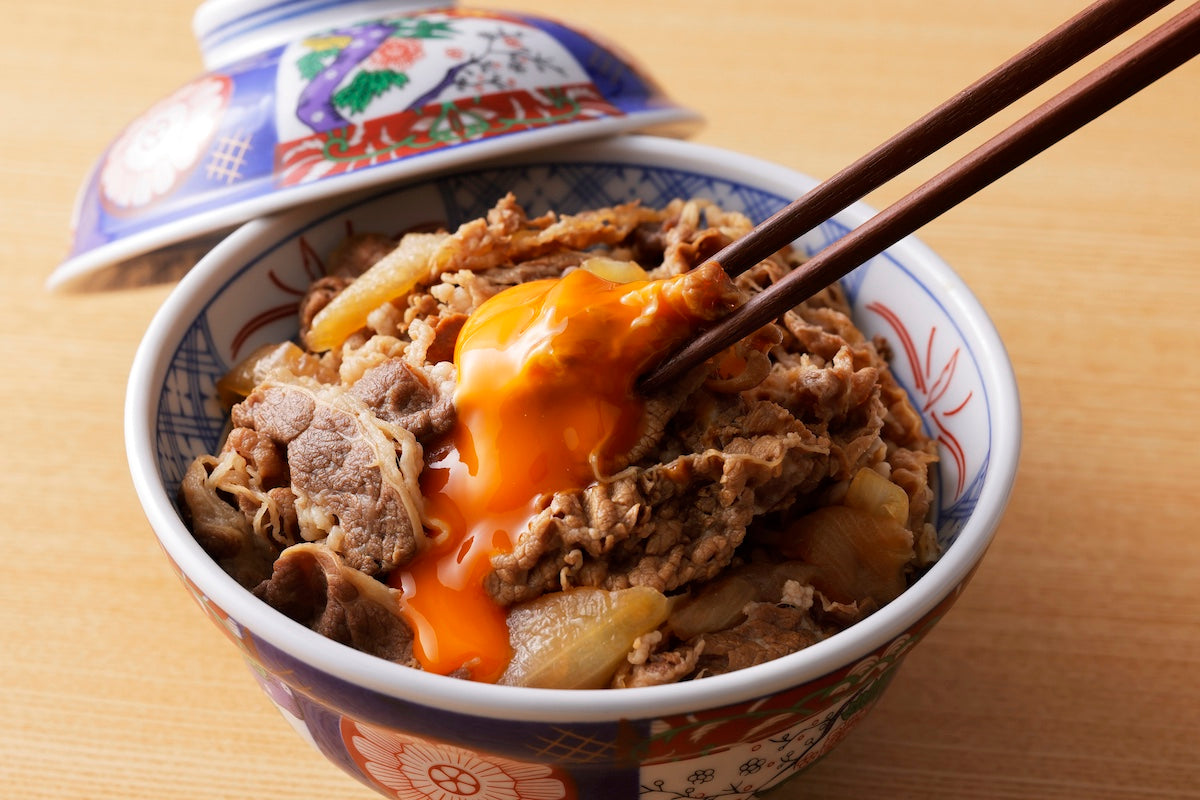
One dish we have no beef with is gyudon. Also known as gyumeshi — literally, ‘beef rice’ — this is a hearty one-bowl dish consisting of simmered beef and onions on rice, and it is a national favourite for being a nutritious, budget-friendly meal. However, that description hardly does the dish justice.
For so little effort, making gyudon rewards the cook in spades. Thin onion slices and marbled beef cozy up to each other in a bubbling elixir of soy sauce, mirin, sake, and dashi stock, and then are whisked away from the pan just as both beef and onion have soaked up that delicious sweet-salty sauce. Heap this saucy mess on a bed of hot rice and there you have it — a lightning quick, dangerously slurpable meal that is so much more than the sum of its parts.
This dish wasn’t always part of Japan’s culinary landscape. Read on to find out when it joined the washoku pantheon, and how you can learn to make a bowl of gyudon for yourself any time, anywhere.

The origins of gyudon
Gyudon’s story begins with Japan’s opening to the West in the late 19th century. After centuries of taboo, the Meiji government’s new-fangled policies promoting “civilisation and enlightenment” made eating beef fashionable. Leading the national charge to consume cow was the Meiji Emperor, who had been known to enjoy steak and red wine during his lifetime.
In 1862, an izakaya in Yokohama by the name of Isekuma supposedly opened Japan’s first dedicated gyunabe (beef hotpot) restaurant. It took tough, less-than-top-quality beef and simmered the meat with Welsh onions and a miso-based broth to mask the gamey odours and tenderise the meat. This proved a hit, and imitators followed. Gyunabe restaurants popped up all over Tokyo, including several by pioneering beef merchant Kahei Nakagawa.
By the 1870s, beef hotpot had become a symbol of modern, Westernised dining in the capital. As slaughter techniques improved — as did the quality of meat available — cooks shifted from using miso to a sweet soy-based broth, adding tofu, shirataki, and other vegetables to create the Kanto-style sukiyaki gyunabe that would become gyudon’s direct ancestors.
The invention of gyudon was almost inevitable. It would have been a terrible shame to waste the rich leftover broth studded with bits of beef and vegetable, and so pouring it over rice in a bowl became a cheaper, more filling way to enjoy the taste of gyunabe without shelling out for a full hotpot. This was being sold as gyumeshi in Tokyo during the 1890s.
By the late Meiji period, the name ‘gyudon’ had come into use. In 1899, Eikichi Matsuda opened the very first Yoshinoya at Tokyo’s Nihonbashi fish market, selling a dish very much like gyudon to busy market workers. This ‘gyunabe-over-rice’ dish was termed ‘gyunabe-bukkake,’ while street stalls in Ueno and Asakusa sold similar bowls under the slang term kamechabu.
Initially disparaged as working-class food, gyudon’s status shifted dramatically after the Great Kanto Earthquake of 1923, as simple, filling beef bowls were among the few hot meals readily available in a devastated Tokyo. It was around this time that the concept of gyudon gradually crystallised into the format we see today: a bowl of rice topped with beef and onions simmered in a sweet soy broth.
Gyudon remained a working class staple after the war, but it became a national dish when Yoshinoya began franchising in 1973, followed by competitors like Matsuya and Sukiya. It is still one of the fast foods of choice today — cheap, quick, and served around the clock.

Basic gyudon method
Based on a survey of recipes around the internet (and a few books), most gyudon recipes boil down (pun unintended) to the following methods:
Method 1:
Heat a little oil. Add sliced onions. Then add beef (and occasionally sugar), cook until browned. Add liquid seasonings. Simmer until the sauce has reduced to your liking and the onions are cooked through but not collapsing. Eat with rice.
Method 2:
Add all liquid seasonings to a hot pan. Layer the onion and beef on top. Simmer until ingredients and sauce are cooked to your liking. This method is more similar to how one makes sukiyaki. Eat with rice.
As you can see, the primary difference is in the order in which the ingredients go into the hot pan. Some people like sauteeing the onions first to give them a little added sweetness and colour from the Maillard reactions, as with the first method. The second method has the advantage of being marginally less complicated for the hands-off cook. Neither method is superior to the other; it’s simply a matter of preference.

The other point of difference is the ratio of seasonings. Gyudon sauce consists of dashi stock, soy sauce, mirin, sake, sugar; some recipes skip the sugar or mirin, usually not both. As a means of comparison, here are some of the liquid ratios for gyudon recipes by prominent recipe developers on the internet. These measurements assume 1 cup of liquid is around 240ml, and a tablespoon is 15ml.
- Serious Eats: 120ml dashi stock・60ml sake・30ml soy sauce・1 tbsp sugar
- Just One Cookbook: 120ml dashi stock・30ml sake・30ml mirin・90ml soy sauce・1 tbsp sugar
- The Woks of Life: 235ml dashi stock・30ml soy sauce・30ml mirin・2 tsp sugar
- No Recipes: 120ml dashi・30ml soy sauce・15ml mirin
These ratios reflect the creators’ individual preferences for how they like their gyudon. Marc Matsumoto of No Recipes has a fairly light hand with seasoning here, which might reflect a decision to let the natural sweetness of the onions shine through. (His addition of gelatin is also atypical for gyudon recipes, but results in a beautifully silky sauce.) Nami Chen of Just One Cookbook has by far the boldest sauce here, punchy and full of flavour.
Armed with the above, you can experiment with the ratios and adjust them to suit your own palate. Like it sweeter? Add more sugar. Want a bit more umami? Boost the sake a little, or use a more concentrated dashi stock. Less salty? Use less soy sauce, or replace one tablespoon with dashi.
Japanese recipes for gyudon sometime specify a touch of apple juice or vinegar among the liquid seasonings. This adds much needed zip of acidity and prevents the sauce from being overly one note — Samin Nosrat would approve. Consider adding a teaspoon or two to the sauce and adjust to your liking.

Tips for great gyudon
Use good quality ingredients
Gyudon has very few ingredients, so the quality of each ingredient will make a big difference to the final product — you taste what you pay for. Wagyu will make a sublime gyudon, but will also make your wallet cry. Naturally, you should use a soy sauce whose flavour you enjoy. Regular drinking sake is best here as cooking sake already contains some salt. If you do use the latter, adjust the flavours to taste accordingly.
The beef should be very thinly sliced
This is key to having a quick meal, and also for the sauce to come together relatively quickly. Where possible, look for beef that is nicely marbled, such as ribeye or chuck. If you have access to a supermarket that sells ready-sliced beef for hotpot, that’s perfect.
Beef with more marbling will cook and absorb flavours more quickly. If you have a less fatty cut of beef, you may have to simmer it a bit longer. Regardless, the beef shouldn’t be cooked for too long, lest it become tough and chewy.
Slice the onion from pole to pole
Kenji Alt-Lopez describes this as slicing it “radially into slivers” rather than into rings across its ‘equator,’ which helps the onion slices keep their shape rather than dissolving or collapsing into the sauce. I learned this method years ago while making Thomas Keller’s French onion soup, and have found that this style of slicing works well (unless otherwise specified) for most dishes that contain onion.
Caramelise the sugar
rietveldrefinement on Reddit notes that achieving a sauce like Yoshinoya’s requires making a caramel before adding the other liquid seasonings, a neat little trick which gives the resulting sauce a bit more complexity and body. This adds a few extra minutes to the cooking time, but is well worth the effort. A word of warning: dry caramels can spatter when adding liquid afterwards, so a little care is warranted.
(In case you’re curious, here’s a primer to Maillard reactions, which also has a little section on caramelisation.)
Skim the scum
This means using a spoon or dedicated mesh scum-skimmer to remove the grayish foam that rises to the surface of the sauce as it cooks. That foam consists of denatured/coagulated proteins and fats coming out from the beef. It is not a dealbreaker if you don’t bother with this. However, letting the foam emulsify back into the sauce will make the sauce taste just a little bit muddy (compared to removing it).

What to put on top of gyudon
- Throw an egg on top — raw, fried, poached, coddled in a hot spring. It’s about a runny yolk stirred into the entire affair for added richness
- A scattering of beni shōga (red pickled ginger) or kimchi for much needed acidity
- A fistful of chopped scallions for sharp, vegetal freshness (and to pretend that this is a healthy, balanced dish)
- Shichimi (seven-spice chili pepper) for heat
- Toasted sesame seeds
- Melted cheese, because why not
- Tofu puffs to soak up all the extra sauce