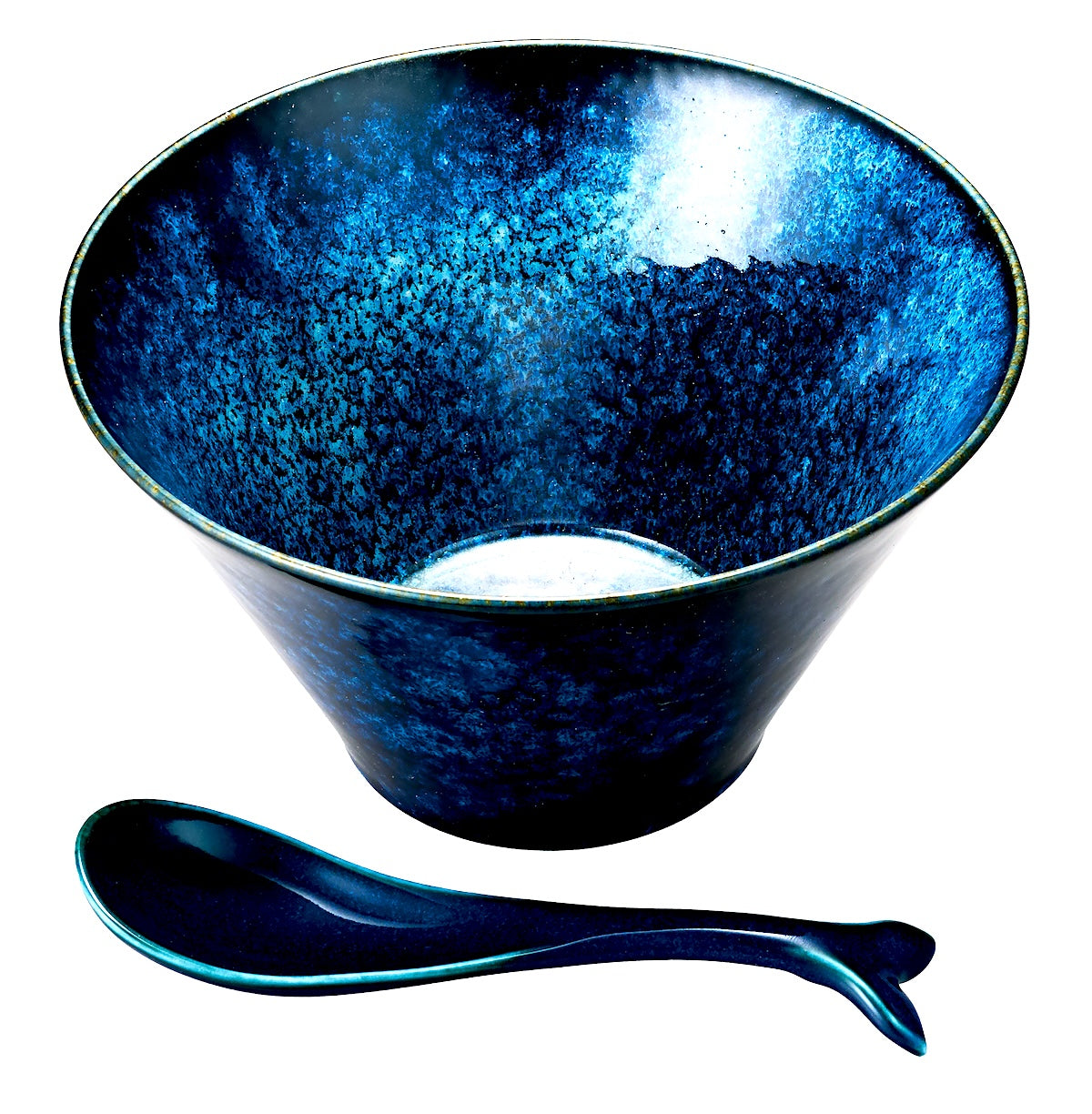
Ramen is fleeting by design. The noodles soften. The broth cools. A perfect bowl of ramen exists in a narrow window of time between 'too hot to approach safely' and 'slightly disappointing'.
But the vessel can stretch that moment out: the right ramen bowl changes the entire experience without changing the recipe at all.
Style Features: Ramen Bowl Size and Design
Ramen bowls flare outward. The reason? The layer of fat that sits on the surface of any rich broth - pork bone, chicken, the oily shimmer of a shoyu tare - acts as a natural insulator, trapping heat below it. A wider opening maximizes that insulating surface.
The main shapes each solve a different problem. The kodai don - featuring a raised foot and a gently rounded body - is the workhorse of the ramen world. It holds between 800 ml (27.1 fl oz) and 1,500 ml (50.7 fl oz) depending on size, accommodates a serious portion of noodles and broth and makes it easy to drink directly from the rim. A variant called the han kodai don flares the rim more dramatically still, releasing aroma before the first sip, which makes it particularly suited to delicate shio or shoyu broths.

Then there's the kittate don, characterized by straight sides great for heat retention and keeping the ingredients together. It stacks well and looks modern, making it the favored choice for many contemporary ramen shops.
For everyday use across ramen and rice dishes alike, the tayo don, a slightly smaller multi-use bowl, earns its space in the cabinet with versatility rather than specialization.
Bowl depth also needs consideration. The kodai don is deep enough to keep the broth hot while leaving the toppings visible. Shallower bowls trade some heat retention for a more spread-out visual presentation. The bowl shape affects the dining experience at a level most people never notice but experience with every bite.
Clay vs. Plastic: A Serious Conversation About Soup Temperature
When it comes to choosing a material for a ramen bowl, the decision usually comes down to two options: ceramic or melamine.
Ceramic - both earthenware and higher-fired porcelain from regions such as Arita and Mino - has thermal mass: it stores heat and radiates it back into the soup. A well-made ceramic ramen bowl, pre-warmed with steam or hot water before serving, will keep your broth hotter for significantly longer than a bowl taken cold from the cabinet.
Melamine, adopted by the US Navy during 1940s-1950s because of its resilience, reached the Japanese food service market around 1955 and has been in professional kitchen rotation ever since. It is roughly half the weight of ceramic, rarely chips or cracks in normal use, and keeps the bowl's exterior cool to the touch even when full of steaming broth. What it does not do is store heat: soup in a melamine bowl cools noticeably faster than the same broth in a ceramic bowl.
Melamine is also not microwave-safe - the resin degrades under microwave energy - and bowls that have become pitted or look chalky should be replaced rather than pressed back into service.
For meals where the ramen experience is the point, ceramic or porcelain wins on atmosphere alone. Melamine wins if you prioritize durability.
What Your Ramen Style Is Asking For
Choosing the right bowl involves a principle that Japanese ramen professionals apply without much conscious thought: the bowl's color, shape and depth should work with the soup, not against it.
For shoyu and shio ramen - the clear, amber broths of Tokyo and Hakodate - the recommended ceramic bowl is white, pale blue or celadon, with a wide flared rim. The clarity of the broth and the shimmer of the oil on its surface show beautifully against a pale interior. The flared rim also allows aromas to spread naturally upward as you eat, which is why these broths taste more fragrant in the right vessel.
Tonkotsu - Fukuoka's rich pork-bone broth - calls for the opposite approach. Thick-walled bowls in matte black or deep colors, especially in the rustic textures of Mino ware, create a high contrast against the milky white of tonkotsu soup.
Miso ramen, with its generous toppings, earthy warmth and the thick and rich broth of Sapporo-style bowls, suits wide-mouthed tama-don shapes in earth tones.
Toyama's black ramen - dramatically ink-dark with dark soy sauce - looks best in pale, plain bowls that don't compete for attention.
For anyone cooking different ramen styles at home, a bowl with a capacity of around 1,200 ml (40.6 fl oz) in a neutral white or a classic kodai-don shape is the most versatile starting point. It handles a full range of noodle soup dishes - udon, soba and pho among them - without the soup style fighting the vessel.
The Supporting Cast

A ceramic ramen bowl set typically includes the bowl, a renge spoon and a chopstick rest, or hashioki.
The renge's full name is chiri-renge - fallen lotus petal - because the shape of the spoon's bowl evokes a single petal of the lotus flower, dropped and curving slightly upward at its tip.
There are two variants designed specifically for ramen. The hooked renge has a small protrusion at the top of the handle that rests on the bowl's rim, preventing the spoon from sliding into the broth. The notched renge achieves the same with a cut rather than a bump.
Both solve the same problem - a spoon left resting in a deep bowl of broth will eventually disappear into it. This may seem like a minor issue until you have to reach into a bowl of oily soup to fish out your spoon, which emerge with an equally oily handle.
Choosing the Perfect Ramen Bowl Set as a Gift
A ramen bowl set is a more thoughtful housewarming gift than it first appears, precisely because the recipient is unlikely to have thought about it at all. Most people use whatever bowl came with the apartment or the decade.
A well-chosen ceramic ramen bowl set from a named kiln - Mino ware, whose potters have been producing ceramics since the Heian period, or Arita ware with its white porcelain and vivid blue-and-white tradition - arrives with both practical value and provenance.
Pair sets - two bowls, spoons and chopstick rests coordinated to match - are the natural unit for a new home, an acknowledgment that enjoying ramen is better as a shared activity.
For those who want something more personal, name-engraved Mino ware pairs have become a niche but growing gift category: the kind of commemorative ceramic that tends to outlast the housewarming.
The question of modern minimalist versus traditional Japanese motifs is ultimately a question about which the recipient would prefer to see on their table every morning.
Japanese Ceramics Care: Keeping It All in Good Shape
Glazed ceramic bowls - particularly earthenware and rustic-style ceramics - benefit from medome before first use: a 15-20 minute simmer in water used to wash rice. This fills the microscopic gaps in the clay body and reduces the likelihood of staining from soy-heavy broths.
Before each use with hot food, a quick rinse with warm water reduces absorption and helps the bowl hold heat longer. Pre-warm with hot water for a minute before ladling in the soup, and your broth will still be properly hot at the bottom of the bowl.
The fine hairline cracks that sometimes appear in the glaze of earthenware bowls - called kan nyu, or glaze crackle - are not damage. A consequence of the different shrinkage rates of clay and glaze during firing, the cracks are considered a decorative feature of authentic hand-fired ceramics. Over time, they take on a faint patina from use, deepening with each meal.
Some people find this development appealing. Others prefer to limit it through diligent pre-rinsing.
For the regular cleaning of ceramic bowls, use a soft sponge with mild detergent, wash soon after use to prevent oil absorption from noodles and broth, and soak in lukewarm water if oil lingers.
Baking soda helps neutralize odors that work their way into the bowl over time. Dry completely before stacking and store in a ventilated space rather than sealing damp bowls in a cabinet. Stack with a soft cloth or sheet of kitchen paper between bowls to prevent chips.
Beyond Ramen
The Japanese have long understood that appetite begins before the first bite. It begins with color, texture, balance, weight, sound, steam and the unconscious reassurance that the object in your hands was made specifically for the thing you are about to eat. This explains why ramen shops obsess over bowl selection.
Once you have a good ramen bowl, you'll find that it spends little time in the kitchen cabinet. You will reach for it for udon, for soba, for a serious salad and for popcorn at 10 o'clock on a weekend night.
That's just what you do with a well-made vessel.