No one denies that teabags are more convenient. But warming a teapot and releasing the fragrance of loose tea when you measure the leaves in gives you something a sachet can’t: the peace of a tearoom in the middle of your everyday routine.
For those drawn to the Japanese tradition of steeped tea, here's a guide to tea sets - durable, graceful pieces designed to give tea leaves the space they need to open and breathe.
Japanese Teapot Basics: Kyusu and Cups
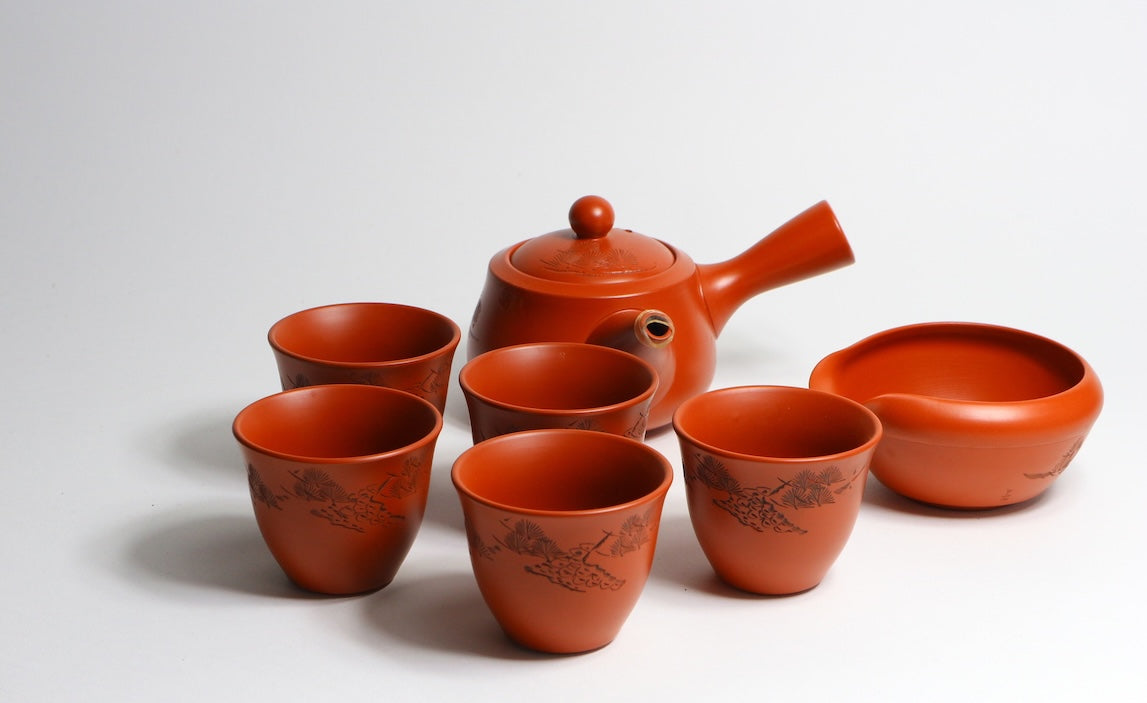
A Japanese tea set, at its most basic, is simply a kyusu and cups.
Generally used for sencha, the kyusu - especially the side-handled version - is typically compact and designed to help tea leaves to expand in the pot. It's also fitted with a built-in strainer so you can pour briskly without sending leaf bits into the cup.
For cups, everyday sets usually include yunomi - taller cups that are easier to hold.
Guest-oriented sets lean towards kumidashi: lower, wider cups often served on chataku saucers. Kumidashi gives the aroma room to rise and makes the color of sencha part of the pleasure.
Types of Japanese Teapots
When it comes to tea, small shifts in water temperature and steeping time mean big changes in flavor and aroma. That sensitivity explains the design of Japanese teapots.
Yokode Kyusu and Ushirode Kyusu

Not all kyusu are held in the same way.
Yokode kyusu has the iconic silhouette of Japanese teapots: a side handle set at a right angle to the spout so you can pour with a small twist of the wrist while securing the lid with your thumb. This makes it a practical choice for everyday Japanese tea, especially sencha.
Ushirode (back handle) kyusu places the handle opposite the spout, similar to Western-style teapots, which may make it easier to use for those not used to the side handle.
Dobin and Dobin Kyusu for Bigger Pours
With a handle at the top, a dobin looks like a teapot that decided to go camping. The dobin tends to be larger than the kyusu and is made to withstand direct heat - something a kyusu cannot handle.
A modern innovation, the dobin kyusu, looks like a dobin but is meant for steeping tea rather than for going on the stovetop.

If you tend to drink a lot of tea in one sitting - or want to host larger gatherings without the hassle of constantly refilling the pot - a dobin is a practical choice.
It’s particularly well suited to roasted teas such as hojicha, genmaicha and bancha, which are typically served in larger cups.
Hobin and Shiboridashi for High-Grade Teas
Hobin (also romanized as hohin or houbin) is a handleless teapot used for premium teas such as gyokuro and high-quality sencha. Because these teas are brewed at lower temperatures, the pot doesn’t need a handle; you can hold it comfortably and the shape helps with gentle cooling and controlled pouring.

Shiboridashi is even more minimal: essentially a shallow bowl with a spout and lid. Many shiboridashi rely on the gap between lid and body (and fine grooves near the spout) to keep the tea leaves in while you pour.
It’s designed to drain slowly and thoroughly, coaxing out umami from teas such as gyokuro that are brewed for shorter periods at lower temperatures.
Regional Teaware: Tokoname, Banko and Arita
To explore Japanese teaware is to go on a journey of kilns and clay.
Tokoname (Tokoname-yaki) is famous for its kyusu, often made from an iron-rich type of clay known as shudei, or red clay.
Tea drinkers prize it not just for its reddish hues but also for the way the unglazed clay is said to soften astringency and bitterness, letting sweetness and umami come forward.
Banko ware began in the 18th century with the potter Nunami Rozan, who stamped his pieces, Banko or Banko Fueki, meaning 'eternity'. True to its name, this pottery style has endured, with production centered in Yokkaichi and Komono, Mie prefecture.
The functional beauty of Banko-yaki lies in durability paired with refined form, whether in sturdy earthenware hot pots that retain heat evenly or in unglazed shidei kyusu made from iron-rich purple clay. These porous teapots are prized for softening bitterness and drawing out the umami of green tea.
Characterized by vibrant colors and intricate, hand-painted motifs, Arita porcelain - Arita-yaki - is an umbrella term for various styles of porcelain made in the Arita area of Kyushu, one of Japan's four main islands.
Porcelain, being smooth and non-porous, is more resistant to odors and stains. If you want to use one teapot for different types of tea, porcelain is a good choice.
Teapot Details to Check Before Buying
A teapot can be beautiful and still annoy you daily. The best Japanese teapot is the one that pours cleanly, feels stable and doesn’t leak.
Here are a few things to check:

Spout design: look for a pour that doesn’t drip down the spout after you stop. Drip control matters more when your cups are small.
Lid fit: a well-made lid prevents leaks while pouring. It also creates a seal that improves heat retention.
If you can't check the teapot in person, go through any available online reviews to see how the lid sits.
Size: match capacity to your tea time. A pot that’s too large can make it harder to hit a balanced extraction, while a pot that’s too small can turn serving into a stop-and-start routine.
Here's a capacity guide:
1 person: 100-200 ml
2-3 people: 200-340 ml
3-4 people: 340-480 ml
4-5 people: 480-600 ml
The most common and versatile size is a 200-340 ml teapot, making it an excellent first purchase for everyday sencha.
If you tend to drink genmaicha or hojicha - roasted teas that are lower in caffeine and often enjoyed in larger cups - you may prefer a 600-800 ml kyusu instead.
Strainer: if the kyusu is the heart of the tea set, the strainer is the gatekeeper.
Most Japanese teapots are fitted with a stainless steel or ceramic strainer.
The metal strainer, which comes in the form of a removable basket or built-in mesh, is easier to clean and especially useful when you brew teas with smaller particles, such as fukamushi sencha.
Some teapots feature a built-in ceramic strainer, which takes up less space and gives the tea leaves more room to expand. If you prioritize flavor extraction over ease of cleaning, choose a ceramic filter.
Tea Set Accessories: Yuzamashi, Chazutsu, Chataku and Chasaji
Once you have a teapot and cups, a few additions make the whole ritual feel more culturally authentic.
Yuzamashi: a small pitcher used to cool boiled water before it goes into the teapot. This helps to steer the brew away from harsh bitterness and toward sweetness and umami.
Chazutsu (tea canister): protects tea leaves from moisture and light. The traditional cylindrical shape keeps humidity evenly distributed so moisture doesn’t collect in one spot.
Metal canisters seal tightly to preserve freshness, while wooden canisters - paulownia and cedar - have excellent humidity regulation properties.
 Chasaji (tea scoop): for loose leaf measuring. Traditionally made of bamboo or wood but stainless steel versions are also available and may be easier to maintain. (A chashaku tea scoop is used for the powdered tea - matcha - served in Japanese tea ceremony gatherings rather than for loose leaf tea.)
Chataku (tea coaster): protects the table, frames the cup and adds a note of formality even in everyday use.
While lacquered wood is the norm, chataku are also made from bamboo, metal, porcelain and even woven materials such as wisteria.
Oval shapes pair most easily with a variety of cups, while round or plum-shaped versions offer a more traditional look.
In terms of serving etiquette, the cup and chataku are prepared separately and carried in together on a tray. Upon reaching the guest, the host places the teacup on the chataku before presenting it, typically positioning it to the guest’s right.
Caring for your Japanese Tea Set
With proper care, Japanese teaware not only lasts for years but also contributes to the taste of the tea.
Here are a few care guidelines:
Clean the pot promptly; don’t let wet leaves sit in the pot. That’s how odors and stains creep in.
Rinse with warm water: for many pieces, especially unglazed clay, avoid using abrasive sponges and skip the detergent. Soap can seep in through porous surfaces and affect later brews.
Dry your teaware completely: leave the lids off, let air circulate and make sure the spout and filter area are dry before storing to prevent smells and mold.
If stains happen anyway, soak the teaware in a gentle cleaning solution - baking soda and citric acid in a 1:1 ratio mixed with warm water - and rub with a soft sponge. Soak for more than 10 seconds for stubborn stains.
Japanese Tea Sets as Gifts
A tea set is one of those gifts that manages to be practical and symbolic at once.
It's appropriate for weddings, housewarmings, retirements and, of course, birthdays. Just be sure that the recipient actually drinks tea or would like to explore tea-brewing.
For a couple, consider giving a kyusu plus two cups, a tea-for-two set that feels personal without being intimate.
For someone who likes to host at home, choose a set with more cups or a large pot, such as a dobin, that supports serving more guests.
A tea enthusiast may prefer a flatter kyusu - consider Tokoname or Banko ware, for instance - or a small hobin or shiboridashi for high-quality green teas such as gyokuro.
For someone who likes variety, opt for porcelain such as Arita ware because it’s less likely to retain and mix the aromas from different teas.
A nice finishing touch is to bundle the set with a tin or packet of tea leaves and a tea canister, so the gift is ready to use the moment it’s opened.
Mellow Out with Japanese Tea
A pot of Japanese tea asks you to slow down just enough to settle into the present moment and to watch it widen. When you brew for another person, you offer that same spaciousness along with the cup.
And if you make a present of a Japanese tea set, you give craft objects that carry a future: a pot and cups to be used over and over again in an everyday practice of mindfulness.
By Janice Tay