Introduction
Humans have been cooking in clay pots for millennia. From the Palestinian zibdiye and Moroccan tagines to Korean ddukbaegi and Indonesian gentong, virtually every culture has their own version of the clay pot.
Japan’s clay pot is the donabe, used for centuries in everyday cooking. The notion of using a clay pot at home might seem a little old-fashioned today, but there are many reasons these earthenware vessels continue to be well-loved in the modern age.
What can a donabe do that your other metal kitchenware can’t? Read on to find out.

Meet the donabe
Consisting of a pot and a fitted lid, donabe are typically made from thick, porous clay, and can be used directly over an open flame.
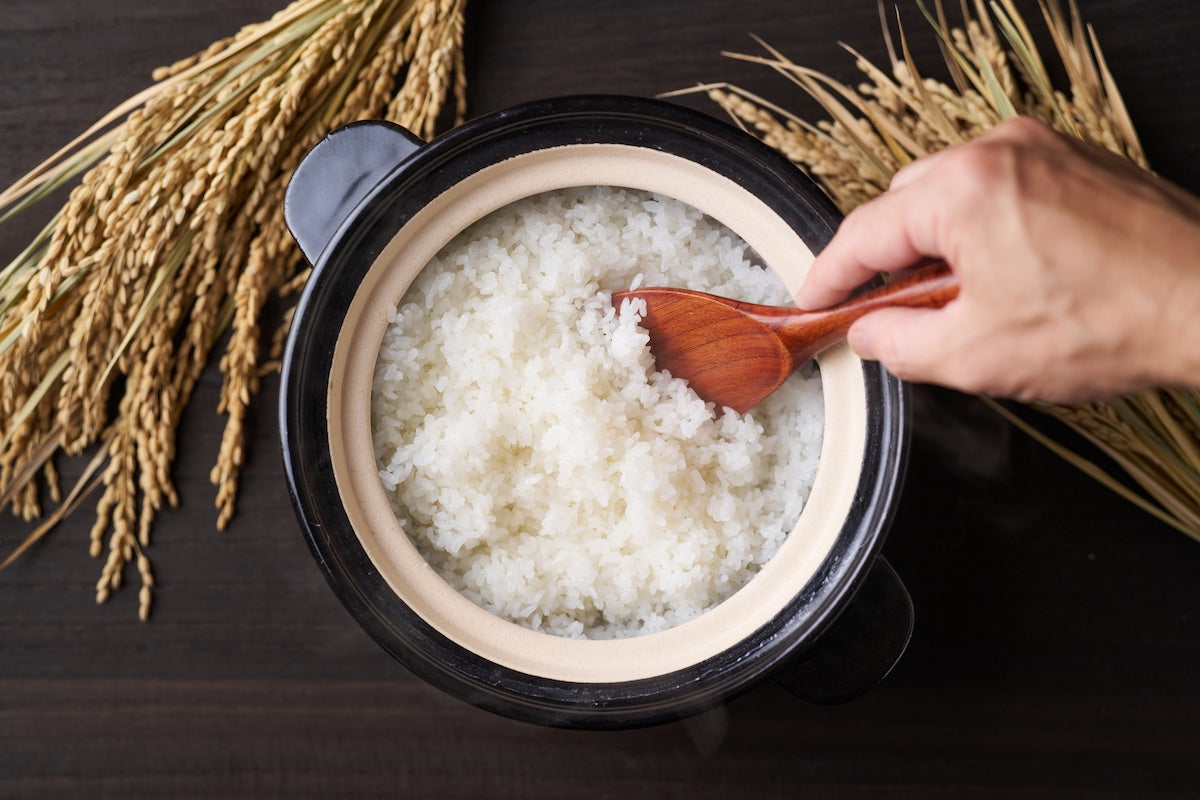
The coarse clay body of a donabe allows the pot to heat slowly and evenly, and then retain heat for long periods of time — ideal for braises, stews, and simmers. It’s no surprise that we see donabe used for hot pots, soups, stews, and rice. Some can even be used for steaming, roasting, and smoking.
A beautiful feature of the donabe is that it is both cookware and serving vessel. The very idea of the donabe evokes warmth and community, the notion of sharing a convivial meal together.
It seems to have been around the mid-Edo period onwards that a culture of enjoying hotpot dishes (nabemono) around a brazier in the main living space developed. At the time, such dishes were primarily served individually from iron pots, rather than from a single donabe in the centre. But this is very likely the origin of the hotpot culture that modern Japanese consumers are familiar with, where all manner of ingredients are placed in a pot of broth and simmered tableside.
The 17th century onwards is also when regional pottery centres such as Iga, Shigaraki, Banko (Yokkaichi, now Mie) and Tokoname began producing durable, porous donabe that could withstand direct flame and retain heat for long periods of time. By the late Edo period, Iga-yaki and Banko-yaki in particular were widely feted for their high-quality donabe and other everyday cookware.
The 20th century saw many changes in Japanese home life. Relevant here is the shift from eating off individual trays to gathering around a table with the rest of the family. This helped solidify donabe as a natural centerpiece of communal meals, as we can see in the expression ‘nabe wo kakomu’ or ‘gathering around the pot.’ Technological advances in ceramic firing after the 1950s improved the durability of donabe, and accelerated their adoption by ordinary households nationwide.

Where are donabe produced?
Iga-yaki donabe
Earthenware pots made in the Iga region of present-day Mie Prefecture use an exceptionally coarse clay sometimes known as ‘breathing clay’. When fired at high temperatures, fossilised microorganisms in this clay carbonise and burn out, leaving millions of microscopic pores that give Iga donabe excellent heat retentive qualities.
Iga pots often have tiny bumps, rough patches, pinholes, cracks in the glaze (called kannyu), and seemingly chipped or uneven rims. These are features, not bugs — all part of the rustic wabi-sabi character of Iga ware. Each pot is hand-formed and kiln-fired, and naturally varies with the conditions during which it was made. Used over many years, Iga donabe gradually develop a beautiful patina and more nuanced cooking performance.
Banko-yaki donabe
These clay pots are made in Yokkaichi City, Mie Prefecture. The word ‘banko’ means ‘eternal,’ which perhaps hints at the longevity and quality of the earthenware produced in this region.
In the mid-20th century, Banko potters developed a patented heat-resistant body by blending local clay with a large proportion (around 40%) of petalite, a lithium‑rich mineral also used in high‑temperature applications such as rocket coatings. This engineered clay gives Banko donabe exceptional resistance to direct flame and thermal shock; besides conventional use on gas stoves and charcoal, some modern Banko donabe have even been developed for use on induction stoves.
Compared to the rustic, highly textured surfaces of Iga or Shigaraki ware, Banko donabe use relatively fine-grained clay and tend to have a relatively smooth finish. They are less prone to absorbing odours, and are generally quicker and easier to season before first use.
Japanese industry sources estimate that roughly 80–90% of all donabe produced in Japan are Banko ware, underscoring how closely the name is tied to everyday hot pots and clay cooking vessels.
Tokoname-yaki donabe
Tokoname donabe are made in their namesake city in Aichi Prefecture. This area has a long history of ceramic production, stretching back to at least the late Heian period (794-1185).
Local clays are rich in iron, which result in a distinctive red-brown body for any earthenware if left unglazed. Because these clays have fine, uniform particles and are fired to a dense, well‑vitrified state, Tokoname donabe combine good heat retention and durability with relatively low water absorption. They are slightly less porous than Iga or Shigaraki donabe, but still perfectly practical for daily use.
Shigaraki-yaki donabe
Another venerable site for ceramic production that turns out excellent donabe. The clay here is coarse and sandy, firing to a warm orange or reddish-brown body. Shigaraki donabe retain heat extremely well and are highly fire-resistant.
Shigaraki donabe are perhaps most distinctive for their appearance — rough, tactile clay surfaces and beautiful natural effects from ash glazes ranging from pink, soft green, and charcoal-dark — making them as much art pieces as they are functional cookware.

Here’s why you should consider owning a donabe
You can cook many things in a donabe, not just classic simmered dishes like yosenabe and sukiyaki. Think everyday soups, curries, perfect rice with a crusty bottom, even steamed or smoked dishes. It can do more than winter hotpot; this can be a year-round companion in the kitchen.
Practically speaking, most donabe cooking is true one-pot cooking. You prepare ingredients, simmer them in the same pot you serve from, and bring it straight to the table. No plating. Everyone serves themselves tableside. Cleanup is kept to a minimum — perfect for busy schedules.
In some ways, donabe cooking also cultivates patience. It is entirely based on slow, gentle heating, where one must wait for the food to cook — a slow, steady heat that lets flavours gradually unfurl underneath the lid, drawing out natural umami and an earthy sweetness from every ingredient. More natural flavour means less need for added fat and other seasonings, ideal for health-conscious eaters.
But is it still compatible with a busy lifestyle? Yes. You prepare all the ingredients, set it on the stove, and forget about it until it’s time. All of the above can be true.
It is entirely possible to live life without donabe. But you would be missing out on one of the great pleasures of culinary life. It’s a bit like grilling food on a charcoal barbecue with all your friends. You don’t have to do it, but the food does taste far better for it.

What to look for when buying donabe
First, determine your use case. Will you make regular hotpots and soups, and cook rice? Or are you going to steam or smoke ingredients?
Consider how many people you’ll cook for regularly. A medium pot is best for 2-3 people, while a larger one is good for 3-5 people. Larger ones in general are more flexible, but smaller ones are easier to handle.
Check the weight, handles, and depth. You want to be able to lift it safely when it’s full. It would be a shame to drop it after all those hours of simmering. A deeper donabe body is great for dishes involving lots of broth and soup. A shallow, wide donabe works well for dishes where presentation is important.
Next, match the type of donabe to your intended cooking and heat source. A standard round donabe is most versatile for all kinds of one-pot meals, but double-lidded rice donabe are ideal if you are fussy about perfectly cooked rice. (Never a bad thing.)
If you cook on gas or a tabletop butane burner, almost any traditional donabe will work. However, for electric or induction stoves, you need donabe that have explicitly been designed for such heat sources.
In general, Banko and Tokoname donabe are more practical for frequent, everyday use — the smooth clay makes them easier to clean. Conversely, Iga and Shigaraki donabe require a bit more care, but they do have superior heat retention thanks to their coarse clay bodies.
Whatever you buy, make sure you treat the pot gently — no sudden temperature shocks or harsh scrubbing. Since donabe are ceramic and can crack if mishandled, pick a piece within a budget that makes you comfortable using it often, not just displaying it.

How to care for a donabe claypot
Like a cast iron pan, donabe require breaking in — but not with oil. Instead, you season a donabe by cooking a thick rice porridge in it, a process known as medome, to protect the pot and improve how it performs.
As we’ve noted above, donabe are naturally porous, with many microscopic holes and hairline gaps in the clay. Simmering thick rice porridge in a new pot helps seal those holes and gaps, since the starch will seep into the pores and form a seal inside the vessel. This is an important step to make the donabe less likely to absorb water, leak, or crack under direct flame.
This same process also improves day-to-day use. By partially sealing the pores with starch, the interior becomes a little smoother and less absorbent. Your donabe is less likely to absorb odours and retain stains from strongly-flavoured dishes, making cleaning up much easier.
By the same token, do not use your donabe as a food storage container. You will never get rid of the smell of whatever you stored inside.
Always wash your donabe by hand using mild soap and a sponge. Don’t leave it soaking in soapy water (and water, generally). Do not put a hot donabe into cold water — this can cause it to crack. Turn it upside down to thoroughly dry before storing.
Donabe hate being left in humid places — they’re prone to moulding. Make sure they are stored somewhere dry after being cleaned.
Useful donabe books
- Donabe: Classic and Modern Japanese Clay Pot Cooking [A One-Pot Cookbook] by Kyle Connaughton and Naoko Takei Moore
- Simply Donabe Cookbook by Naoko Takei Moore