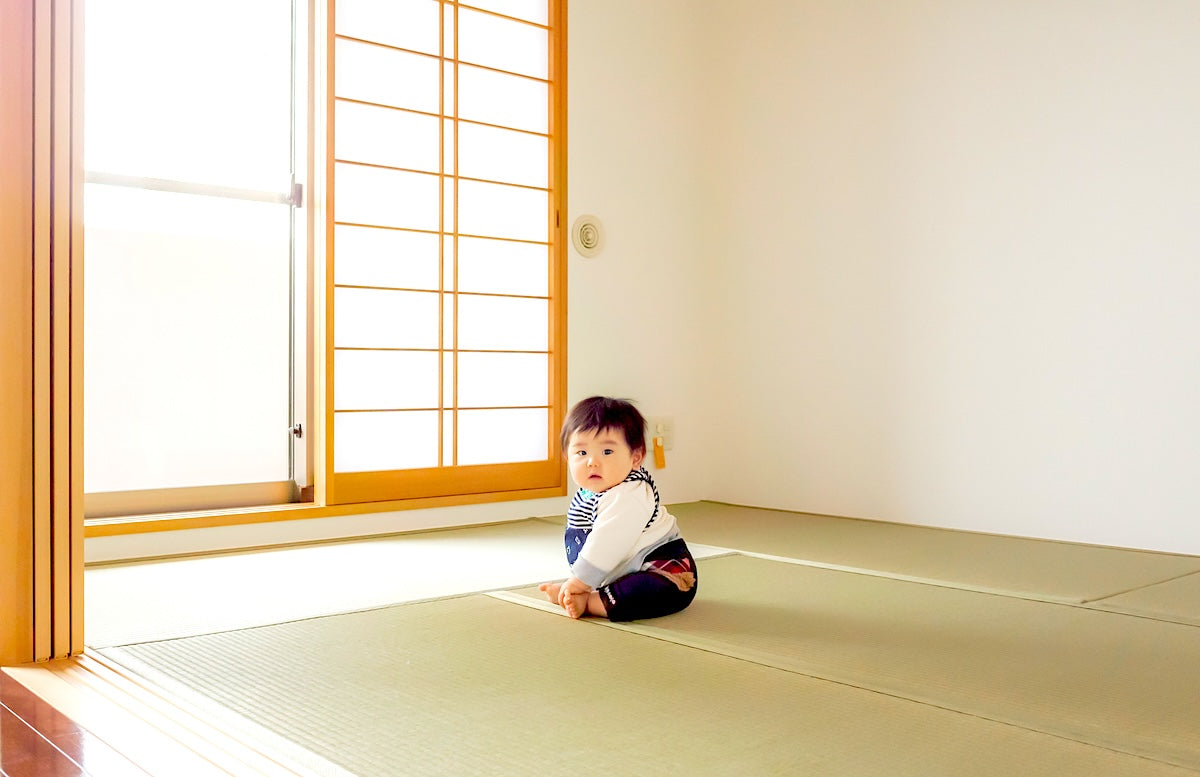
Tatami has been part of Japanese living spaces for more than a thousand years. It has supported samurai naps, created spaces for tea ceremony gatherings and endured generations of people who dragged furniture across it.
But this flooring option isn't just for rooms with sliding paper doors and a tokonoma alcove you feel guilty about not decorating with flowers.
In modern Japanese households and Japandi-style homes, tatami shows up as:
- A grid of thin mats in a corner of the living room for reading, yoga or kids’ play
- A tatami platform raised above wood floor level
- A tatami mattress for guests or futon use.
Tatami encourages floor-level living. You opt for lower furniture, take off your shoes and sit on the mat - and suddenly you’re closer to the ground, your futon and your feelings.
Types of Tatami and Their Needs
A typical tatami mat has a core of rice straw or board or foam, or a combination of these. The core is topped with a woven surface of igusa rush grass, washi paper or synthetic fibers and often finished with a fabric border.
Traditional full-thickness igusa tatami - pale green when new and with an aroma that evokes a forest - needs the most care. It feels great underfoot and regulates humidity beautifully but is more prone to mold.
Modern versions with washi or synthetic surfaces and lightweight foam or board cores are more moisture-resistant and less likely to suffer if you skip a vacuuming session.
The cleaning and care guidelines below are written mainly with traditional tatami in mind but the same habits - good ventilation, gentle cleaning along the grain and a quick response to spills - will also keep modern tatami at its best.
How to Clean Tatami Mats

The good news: to keep tatami flooring clean, you just need consistency, not magic.
Regular cleaning will remove the dust, hair and crumbs that can become buffet lines for mites and mold.
Always Work With the Grain
The mat’s surface is made of tightly woven grass fibers or paper strands. Cleaning along the weave protects these fibers; going across it can fuzz, fray or scrape the mat’s surface.
Daily to Weekly: Regular Cleaning to Keep Dust Down
- Use a soft-bristled broom or vacuum cleaner with the brush turned off.
- Move gently along the grain; aim for about 30-60 seconds per tatami mat.
Monthly: A Light Wipe
- Traditional tatami is highly absorbent - wipe with a damp rather than a wet cloth and wring it out so hard it’s basically reminiscing about water.
- Wipe along the grain.
- Immediately follow with a dry cloth to remove any remaining moisture.
- Avoid abrasive cleaners or strong chemicals; they can discolor fibers and weaken them over time.
Mold, Mites and Other Tiny Pests: Tatami Mat Defense Strategy
Tatami is a humidity sensor in mat form. If the air is humid, tatami will absorb moisture; if high humidity continues for a stretch, mold comes alive.
Mold appears and thrives when it has:
- Moisture
- Temperatures of 20-30°C (68-86°F)
- Relative humidity of above 60-80%
- Dust, skin oils or food spills as nutrients.
How to Prevent Mold Growth in Tatami
- Ventilation is key - open windows or keep fans running for a cross-breeze.
- Use a dehumidifier if your space shows relative humidity of above ~60% for long stretches.
- Wipe up any spills immediately.
- Sweep or vacuum regularly to cut off the mold snack supply.
- Avoid blocking the mat’s surface with rugs, non-breathable foam pads, or a mattress that never moves. If you put a mattress or futon directly on tatami, consider using a slatted base to raise the mattress or breathable foam pads plus a moisture-blocking sheet between the tatami and the mattress.
- In Japanese homes, people sometimes lift or remove the tatami and air them on a sunny day. Even if you can’t remove the tatami completely, lifting the edges once a month for 10-20 minutes allows the humidity underneath to escape.
- If you live in a very humid climate, consider opting for tatami covered with a synthetic or mold-resistant paper surface rather than the traditional kind.
If Mold Appears

For small spots on natural tatami:
- Spray ethanol or rubbing alcohol lightly on the affected area. Gently scrub with a soft cloth or toothbrush along the grain.
- Wipe with a dry cloth and run a fan or dehumidifier until fully dry.
- Keep the room well-ventilated.
- Avoid scrubbing the area with a wet cloth and saturating the mat.
To Control Mites and Other Pests
- Keep the dust down with regular sweeping or vacuuming (use a vacuum cleaner with a HEPA filter if you have allergies).
- Sun-air tatami when possible; heat and dryness are mites’ sworn enemies.
- Use a futon dryer over tatami areas that are often covered by bedding.
- Consider modern tatami that has been treated to resist mites if you live in a high-risk area.
Spills, Stains and Dents: Emergency Tatami Mat Care Guide
Even in serene Japandi homes, life happens. Someone might spill tea over the tatami or a child might go rogue with a crayon.
Spills
- Act fast. Blot immediately with a dry cloth or paper towel - don’t rub; just let the cloth soak the liquid up.
- For sugary or sticky spills, follow with a barely damp cloth (dilute a mild detergent if needed), then a dry cloth.
- Ventilate and use a fan or dehumidifier to dry the area quickly.
- If the stain lingers, a diluted citric acid or vinegar solution (tested in an inconspicuous spot first) may help to lift the discoloration. Always finish by wiping with a slightly damp cloth and then a dry cloth.

Crayon, Marker or Mystery Stain
- Gently scrape away any waxy residue with a plastic card, moving along the grain.
- Dab with a cloth lightly moistened with diluted mild detergent. If that fails, try a cotton swab with a little rubbing alcohol. Blot, don’t scrub wildly.
- For older, stubborn stains, getting a tatami professional to resurface the mat may be better than waging chemical warfare on a single square inch.
Dents From Furniture
Heavy furniture can leave dents but many tatami mats, especially those made with rice straw, will bounce back over time thanks to the air in the core. Other ways of reducing dents include:
- Using furniture pads under the legs.
- Changing the position of the furniture occasionally.
- Rotating mats seasonally so one area of the mat’s surface doesn’t take all the pressure.
Shoes and Pets: Points to Note
Shoes: Hard no. Shoes grind grit into fibers and shorten your mat’s lifespan.
Pets: Claws can snag the weave and toilet accidents can leave deep stains. If you have pets, you may prefer to get tatami with resin surfaces that are designed to be stain-resistant.
Clean and Fresh for Years
Tatami has survived a millennium of climate shifts and changing architecture - and you can help it survive a little longer by keeping robot vacuums away.
If you care for your tatami mat, it will repay you by transforming the floor into a grounding landscape - your own small forest, cultivated indoors.
By Janice Tay